Middle and Senior School
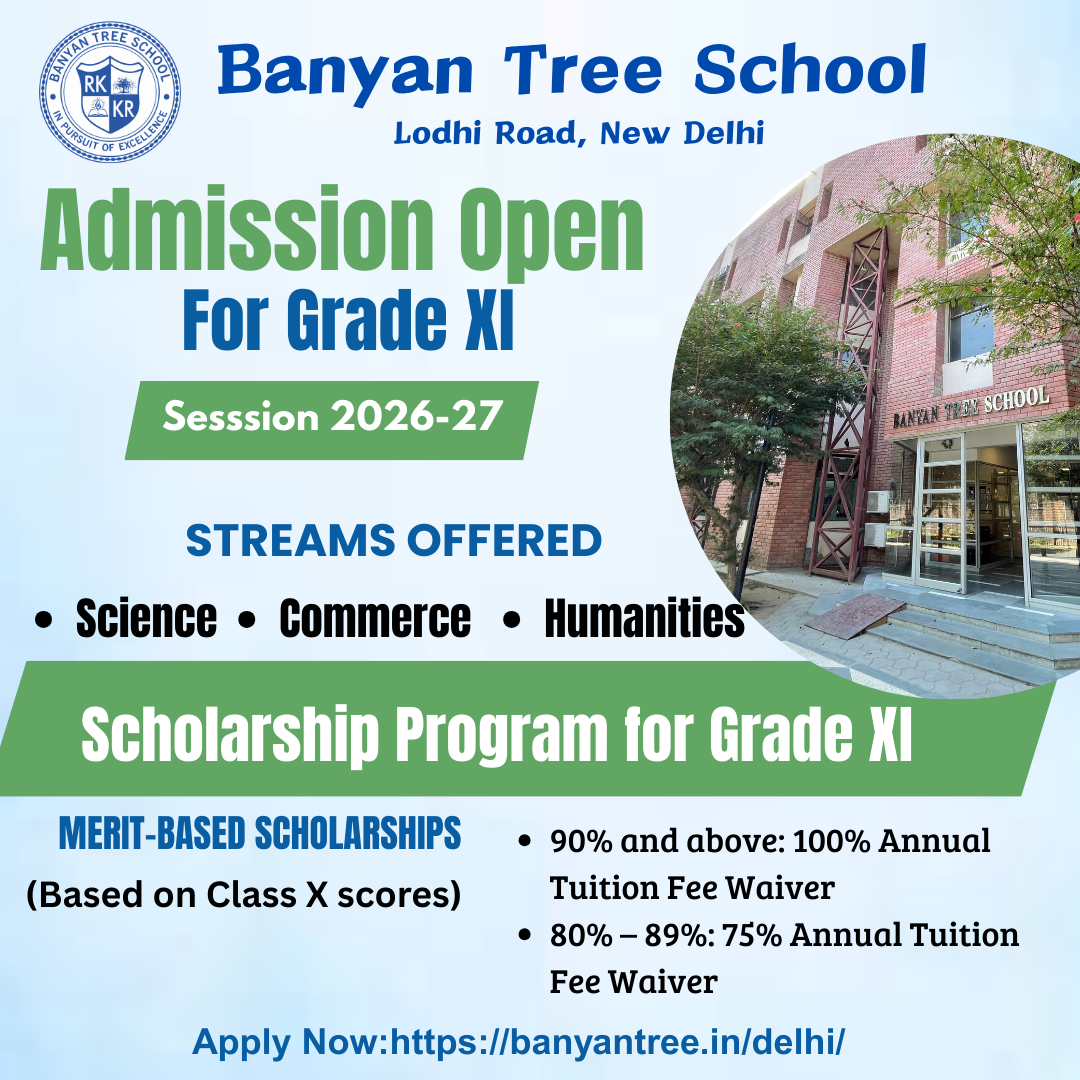
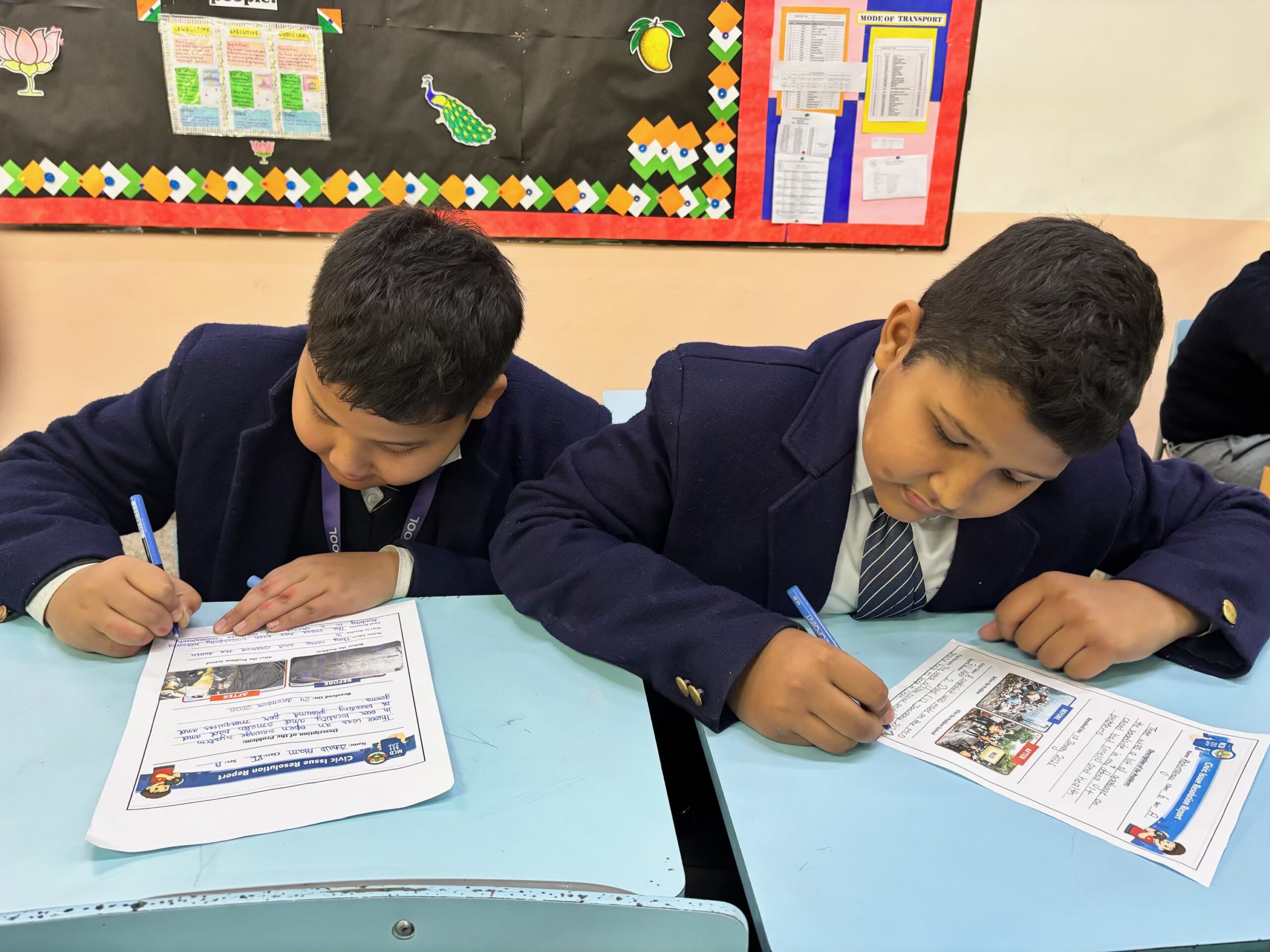
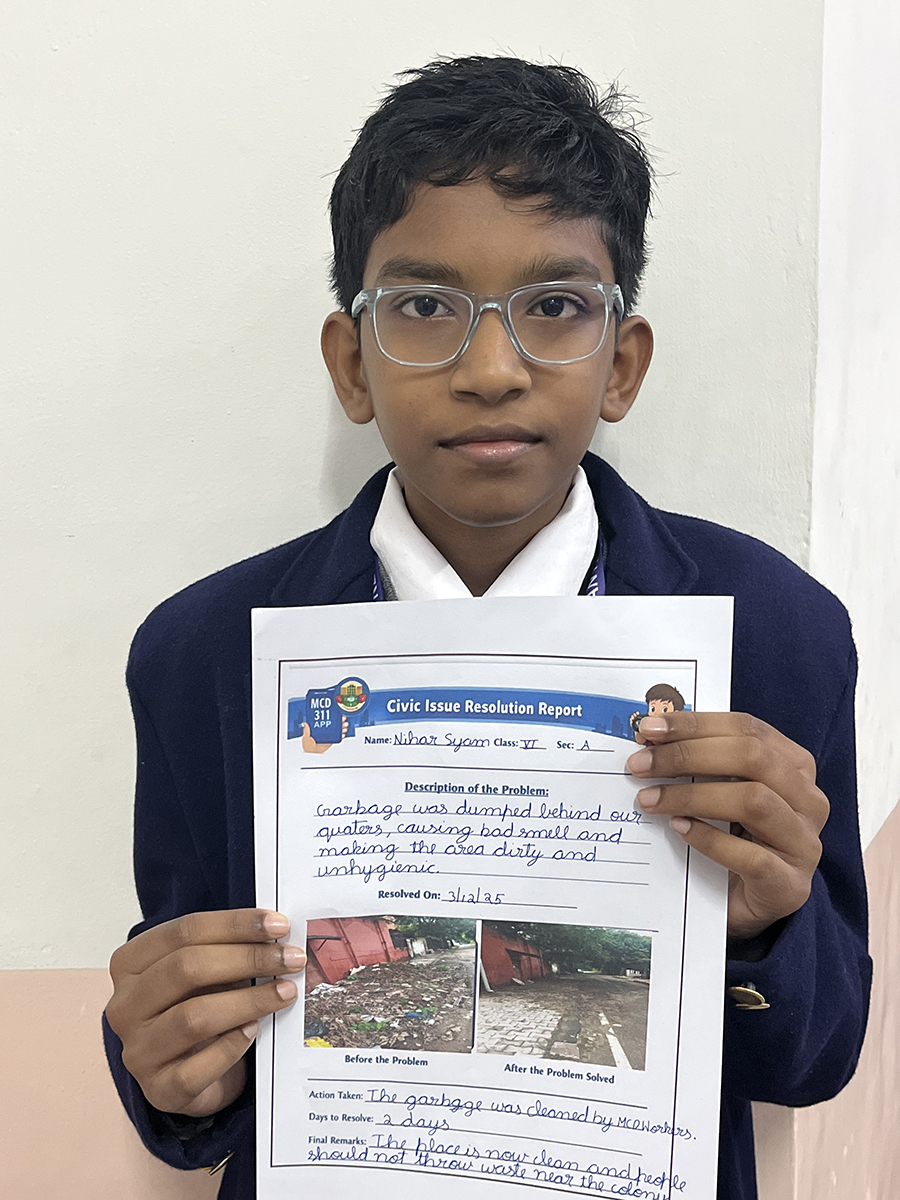
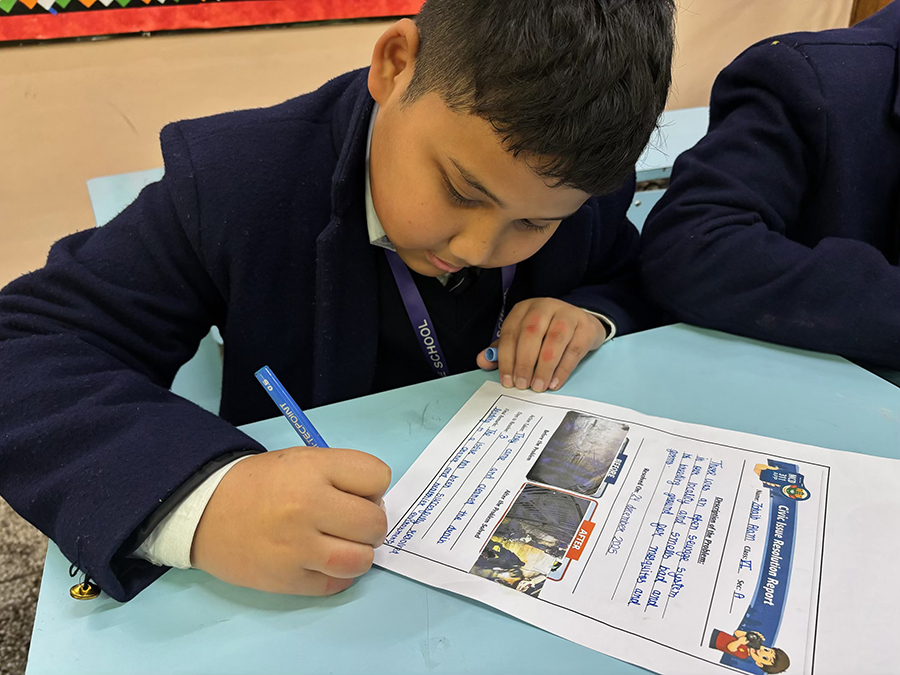
ART INTEGRATED LEARNING – RAISING A CIVIC ISSUE USING MCD–311 APPLICATION – December 2025
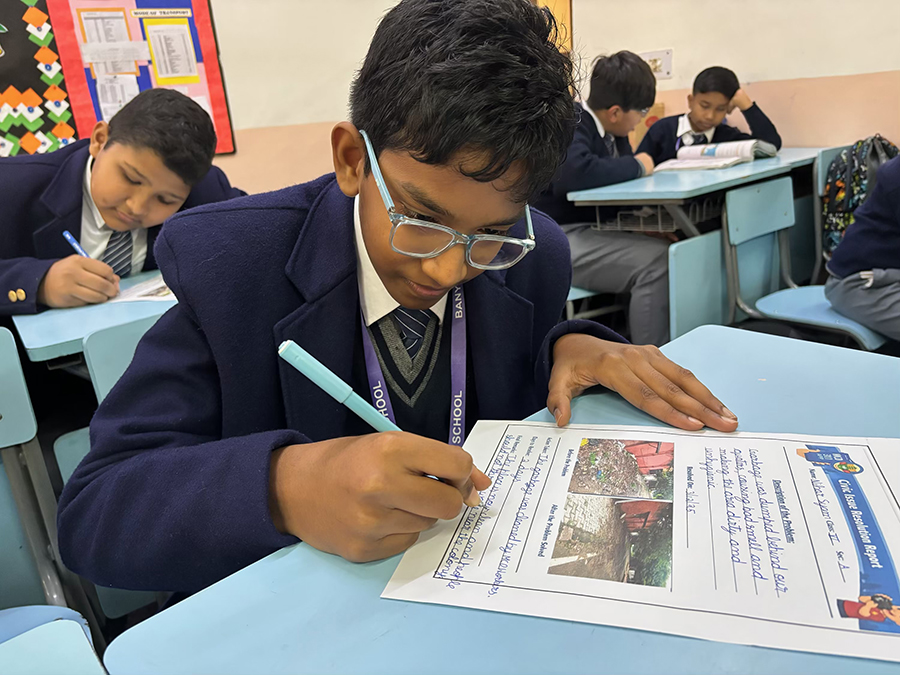
Students of Class VI participated in a civic awareness and digital literacy activity using the MCD–311 application. They were guided to download the app, create their accounts, and log in successfully. Students identified civic issues in their surroundings such as garbage accumulation, damaged roads, non functional streetlights, or waterlogging, and clicked photographs of the problems. The complaints were uploaded through the application, allowing students to understand the process of reporting public issues to local authorities. After the resolution of the problem, students prepared a brief report highlighting the nature of the issue, the action taken by the concerned department, the number of days required for resolution, and attached before-and-after photographs.
This activity enhanced students’ sense of civic responsibility, digital skills, and awareness of local governance. It encouraged observation, problem-solving, and active participation in community welfare, making learning practical, meaningful, and experiential.
This activity enhanced students’ sense of civic responsibility, digital skills, and awareness of local governance. It encouraged observation, problem-solving, and active participation in community welfare, making learning practical, meaningful, and experiential.
ROTATIONAL SYMMETRY – MATHEMATICS ACTIVITY- 27.12.2025
‘Mathematics becomes meaningful when learned through exploration.’
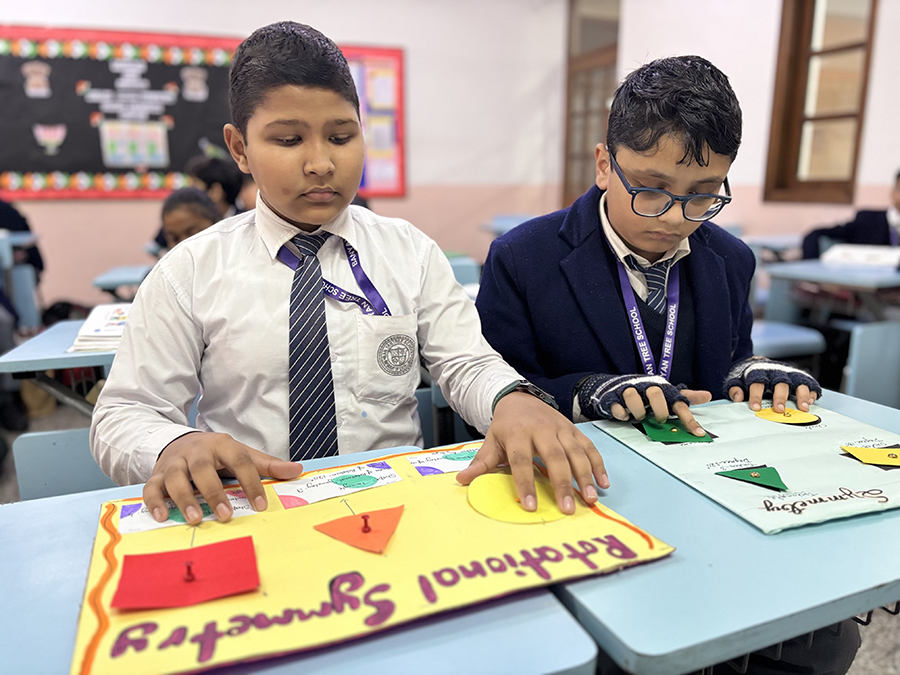
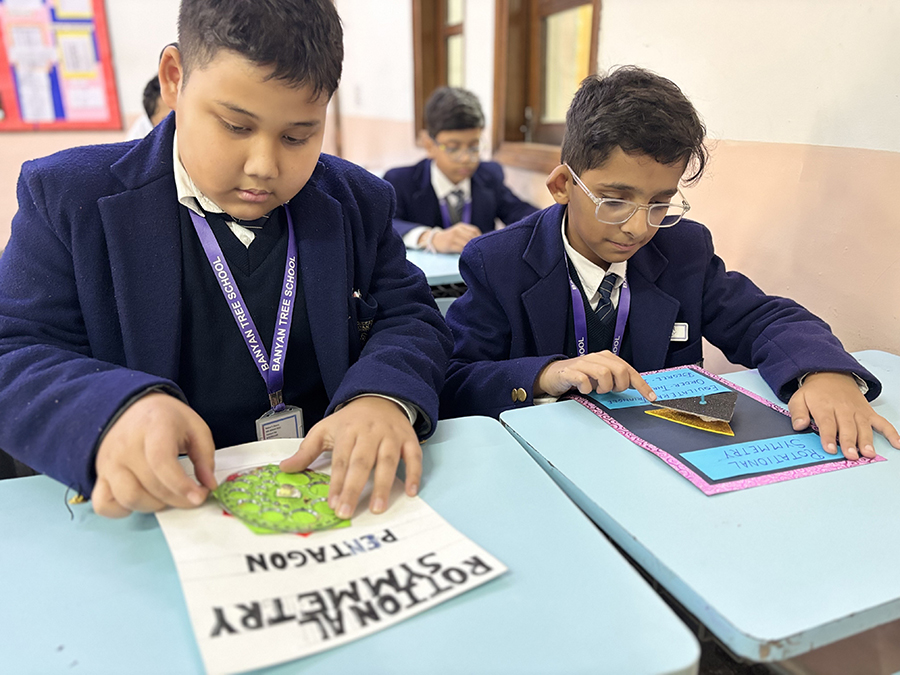
Students of Grade VI actively participated in an engaging activity on Rotational Symmetry. Using paper cut-outs and real-life objects, they identified angles of rotation and orders of symmetry. The activity enhanced spatial reasoning and helped learners connect mathematical concepts to daily life. Through observation and experimentation, students developed a deeper understanding of geometry while strengthening logical thinking skills. The session reflected our school’s commitment to activity-based and learner-centric education.
Students of Grade VI actively participated in an engaging activity on Rotational Symmetry. Using paper cut-outs and real-life objects, they identified angles of rotation and orders of symmetry. The activity enhanced spatial reasoning and helped learners connect mathematical concepts to daily life. Through observation and experimentation, students developed a deeper understanding of geometry while strengthening logical thinking skills. The session reflected our school’s commitment to activity-based and learner-centric education.
ART INTEGRATED LEARNING – WATER CYCLE – 12.12.2025
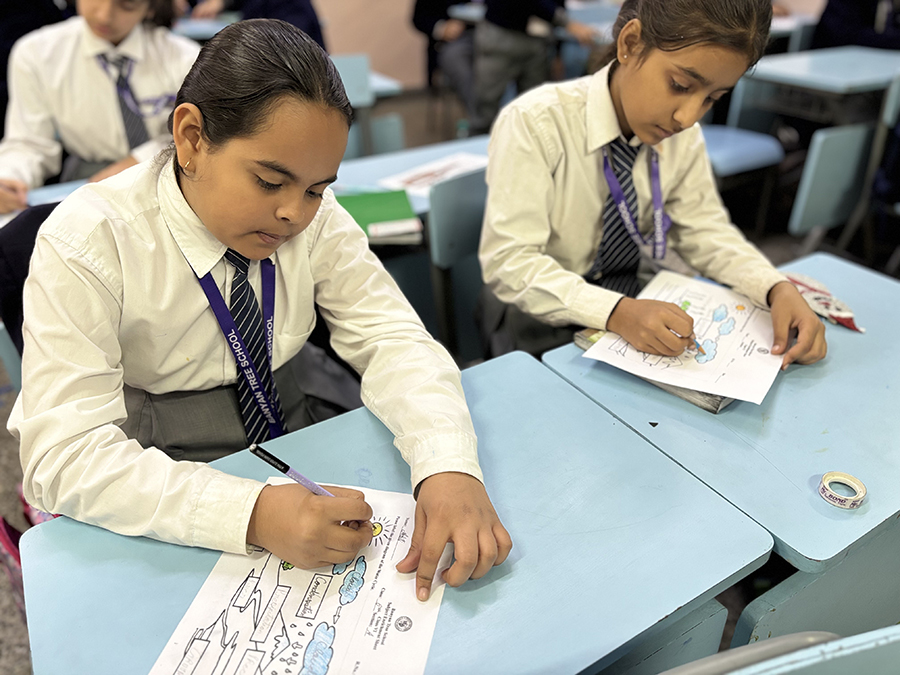
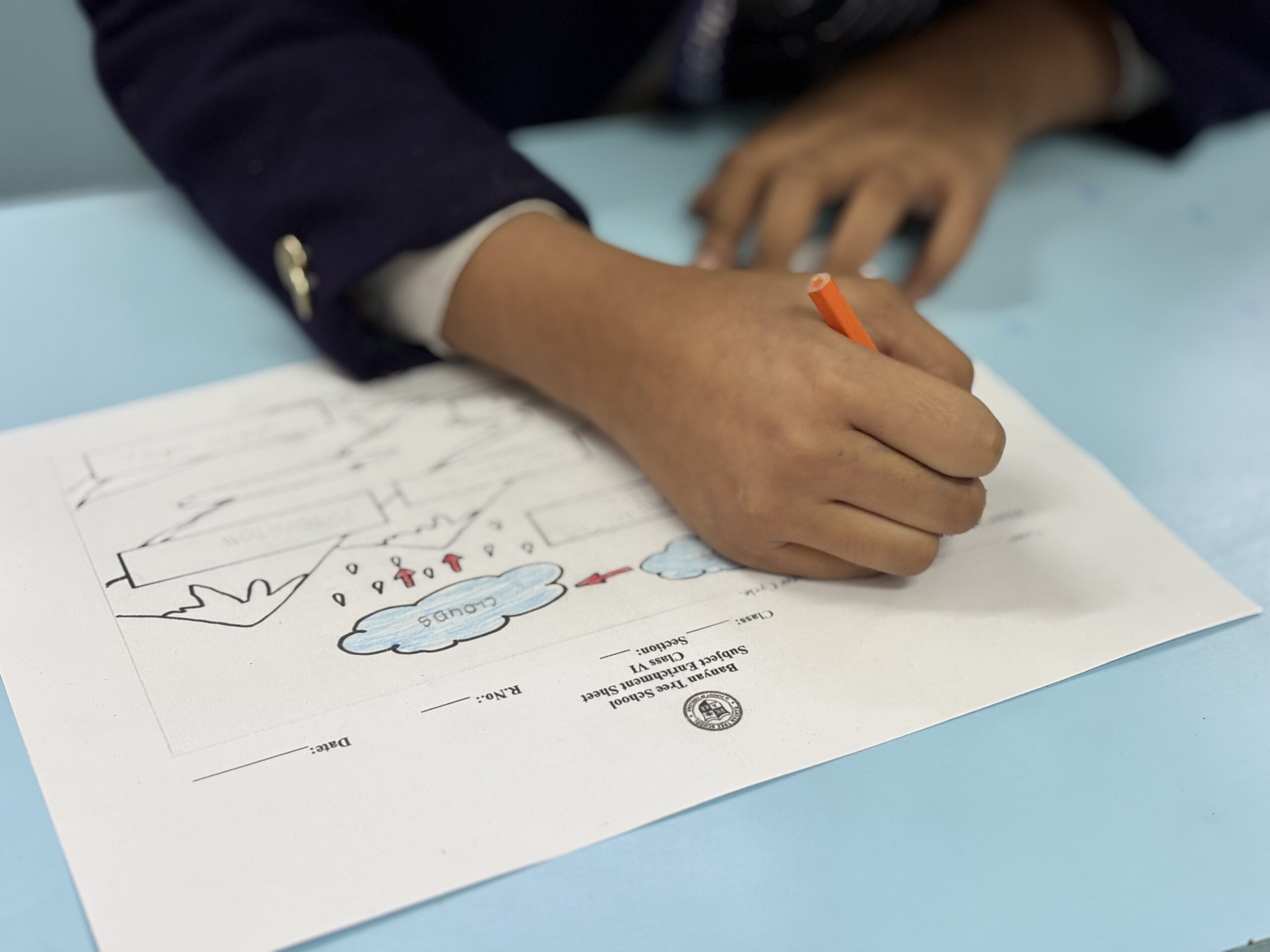
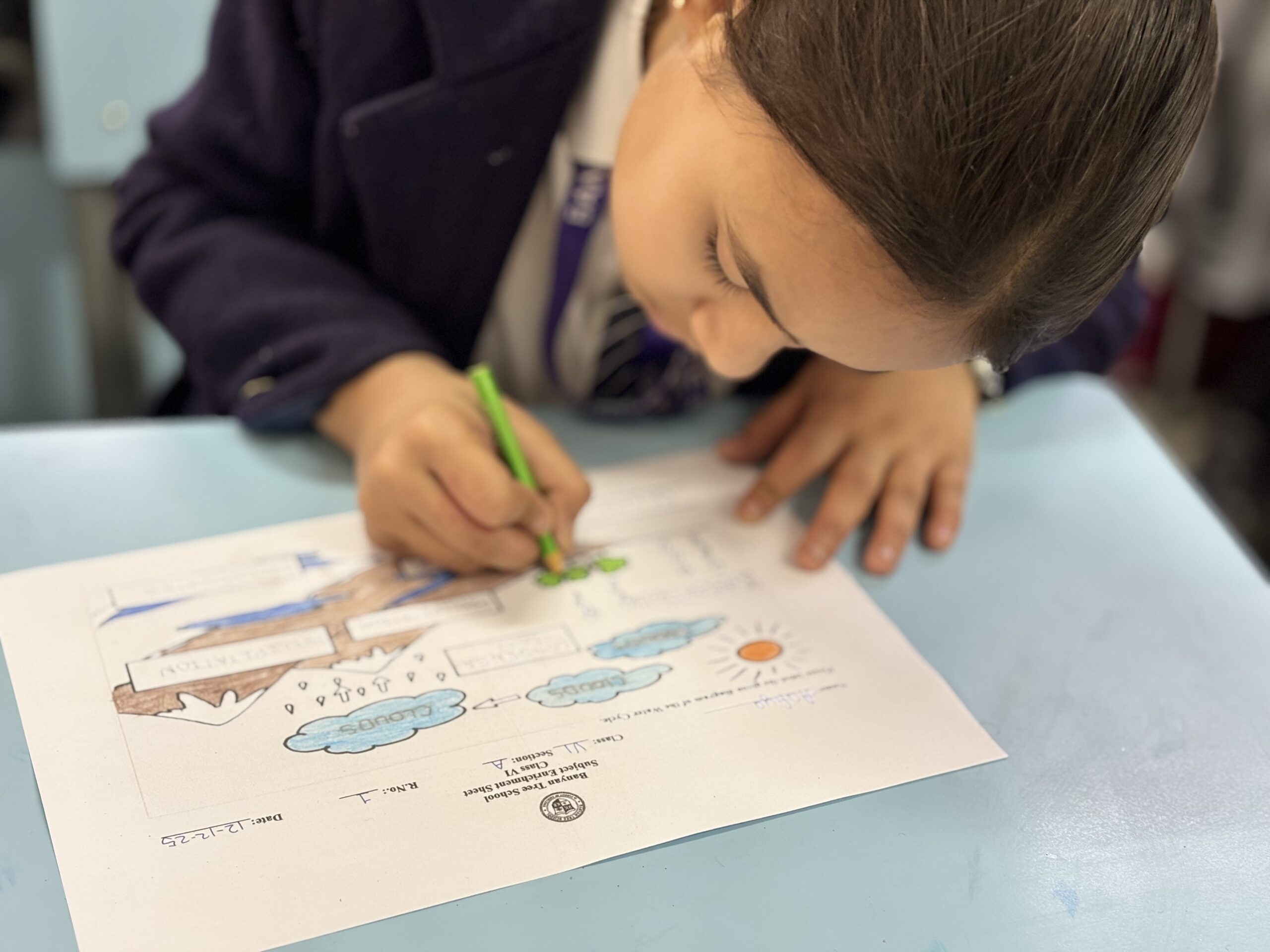
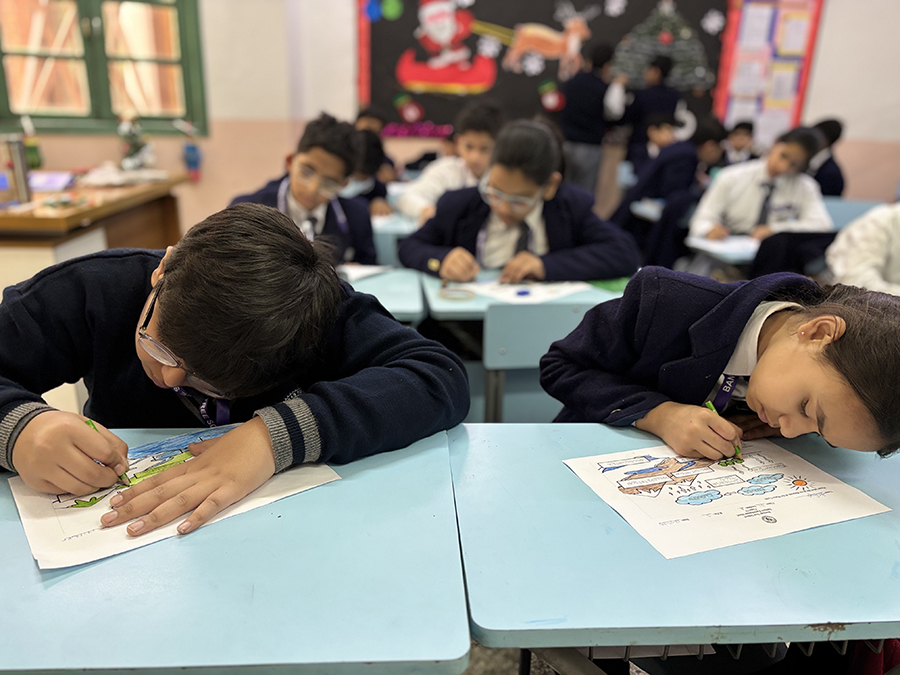
Grade VI students explored the Water Cycle through an Art Integrated Learning activity that blended science with creativity. Learners illustrated evaporation, condensation, precipitation, and collection using vibrant visuals and models. This hands-on approach strengthened conceptual clarity while nurturing artistic expression. The activity encouraged observation, imagination, and collaborative learning, making science both enjoyable and memorable. Such interdisciplinary methods promote holistic development and help students retain concepts through experiential learning.
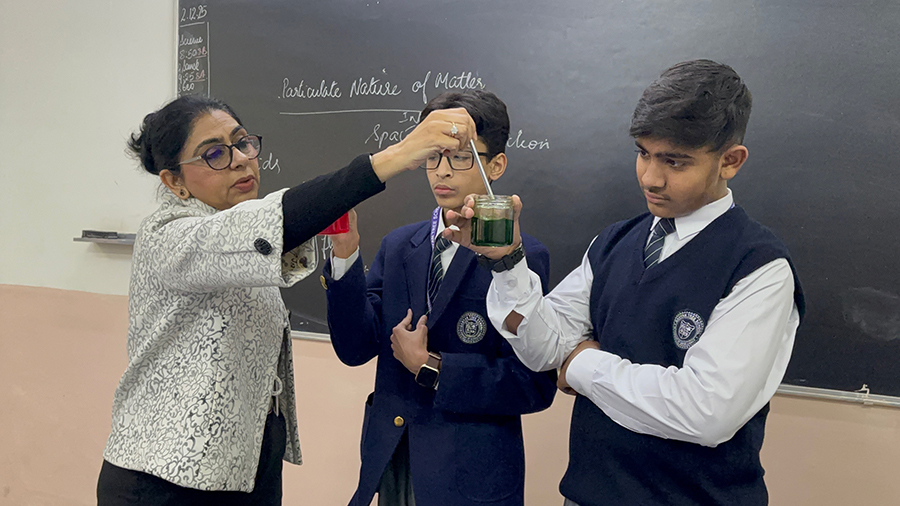
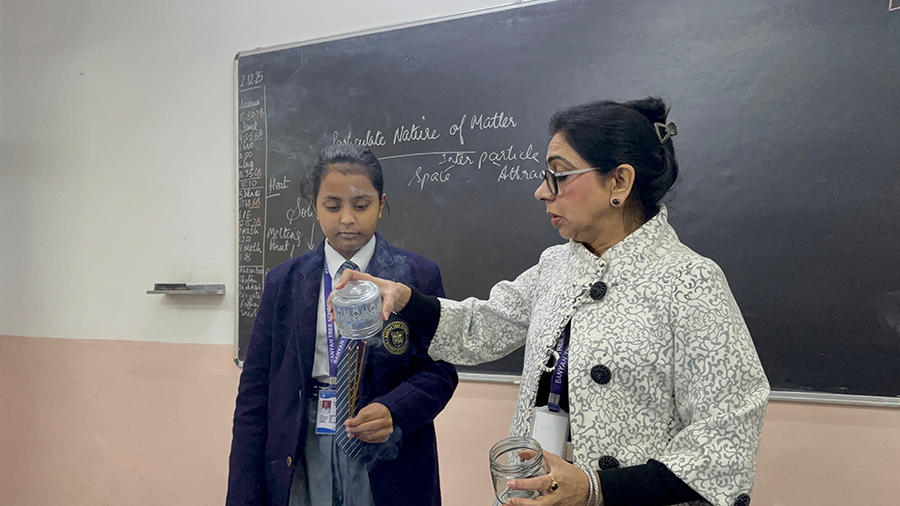
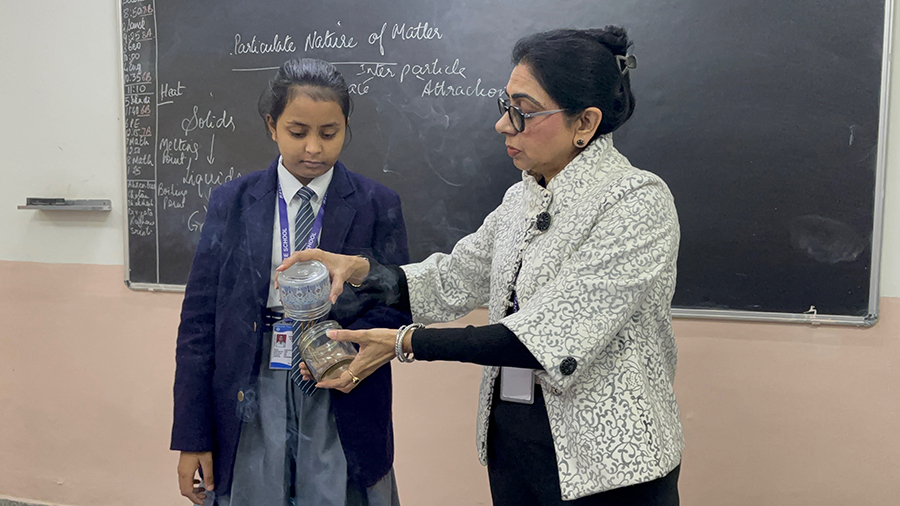
PARTICULATE NATURE OF MATTER – 02.12.2025
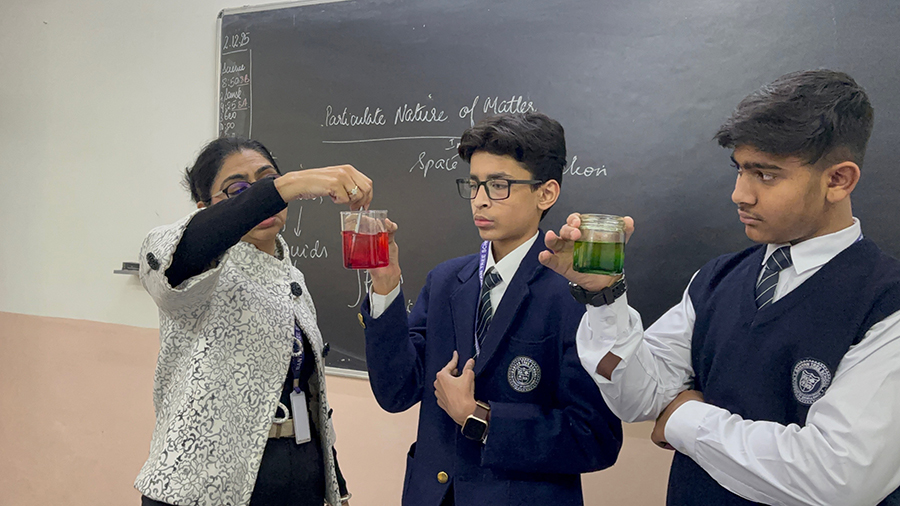
Students of Grade VI explored the Particulate Nature of Matter through engaging hands-on activities. Edible colours were added to water to observe diffusion, helping students understand that liquid particles are in constant motion. The movement of smoke between jars further demonstrated the rapid motion of gaseous particles and their weak intermolecular forces. These experiments enabled learners to visualize abstract scientific concepts with ease. The activity fostered curiosity, analytical thinking, and experiential learning, reinforcing our commitment to concept-based education and scientific temper.
‘Learning becomes meaningful when students see science come alive.’
‘Learning becomes meaningful when students see science come alive.’
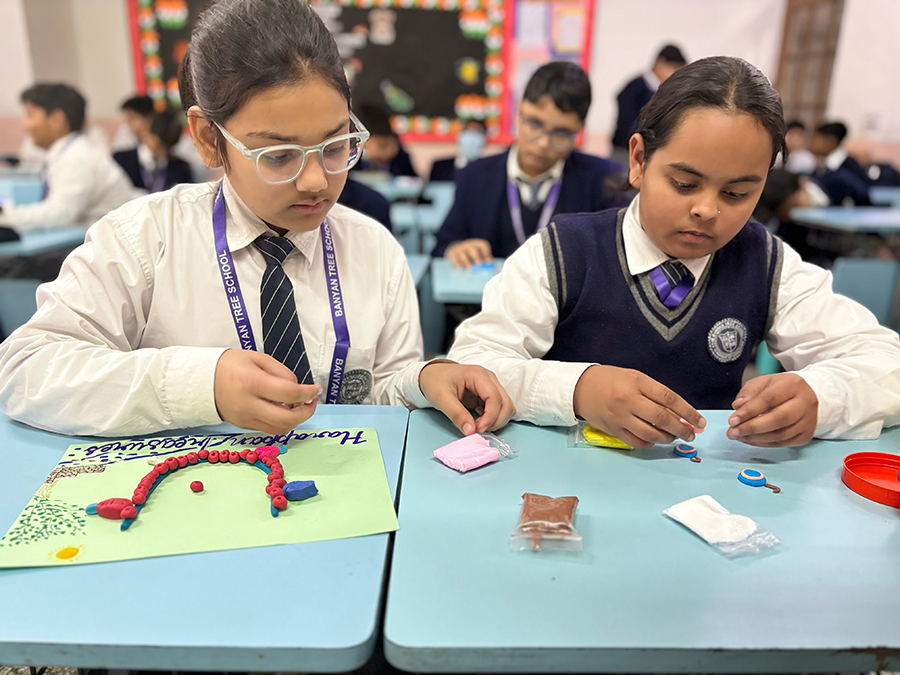
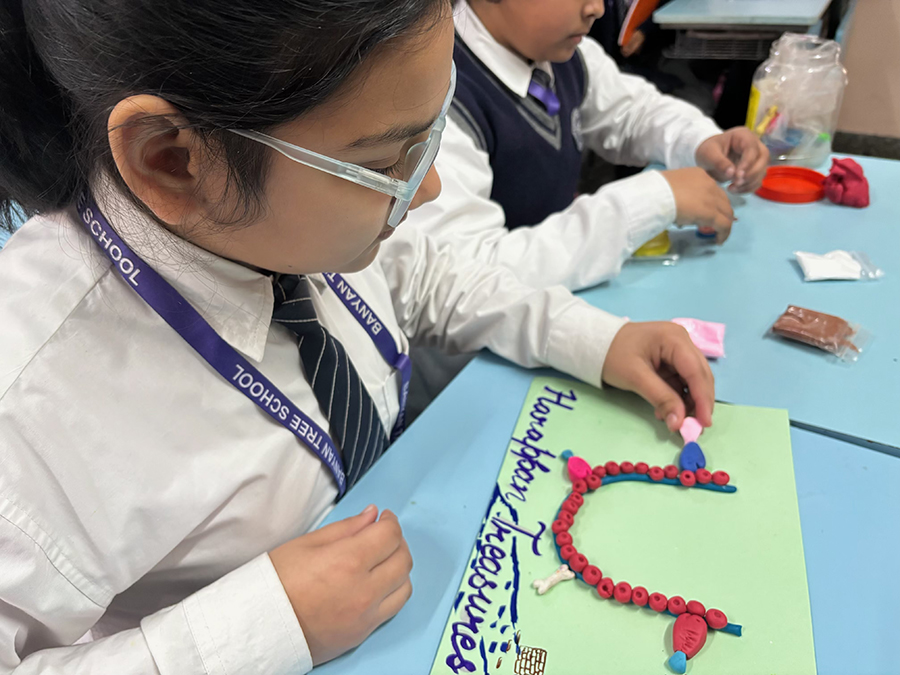
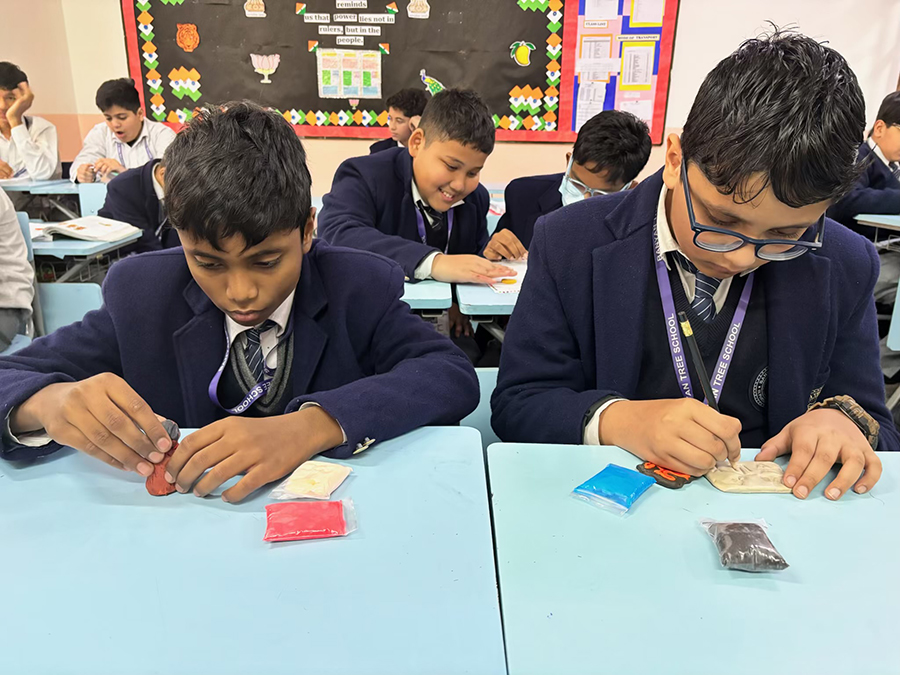
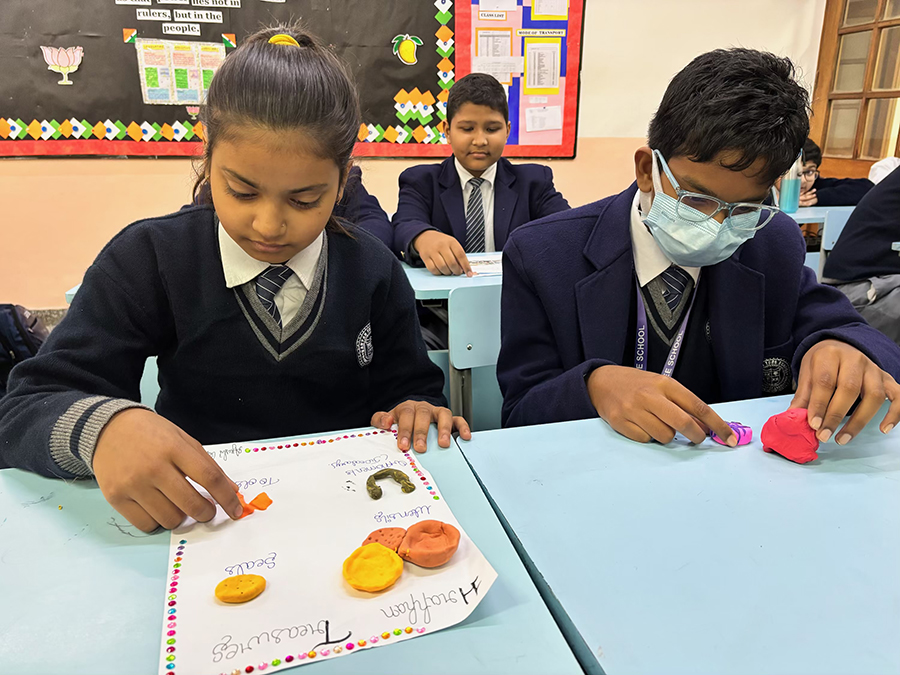
ART INTEGRATED LEARNING – CLAY MODELLING : HARAPPAN TREASURES – October 2025
Grade VI students explored the Harappan Civilization through an Art Integrated Learning activity focused on clay modelling. Learners created miniature Harappan artefacts such as seals, pottery, toys, ornaments, and tools using clay, reflecting the craftsmanship of the ancient civilization. This hands-on approach helped students understand the lifestyle, culture, and artistic skills of the Harappan people while strengthening historical concepts. The activity nurtured creativity, fine motor skills, and historical imagination as students carefully shaped and designed their models. Observation, critical thinking, and collaboration were encouraged as learners discussed artefact features and their significance in daily life. By blending history with art, the clay modelling activity made learning engaging, meaningful, and memorable, promoting experiential learning and holistic development among students.
TRANSPORT OF WATER IN PLANTS – 07.05.2025 & 08.05.2025
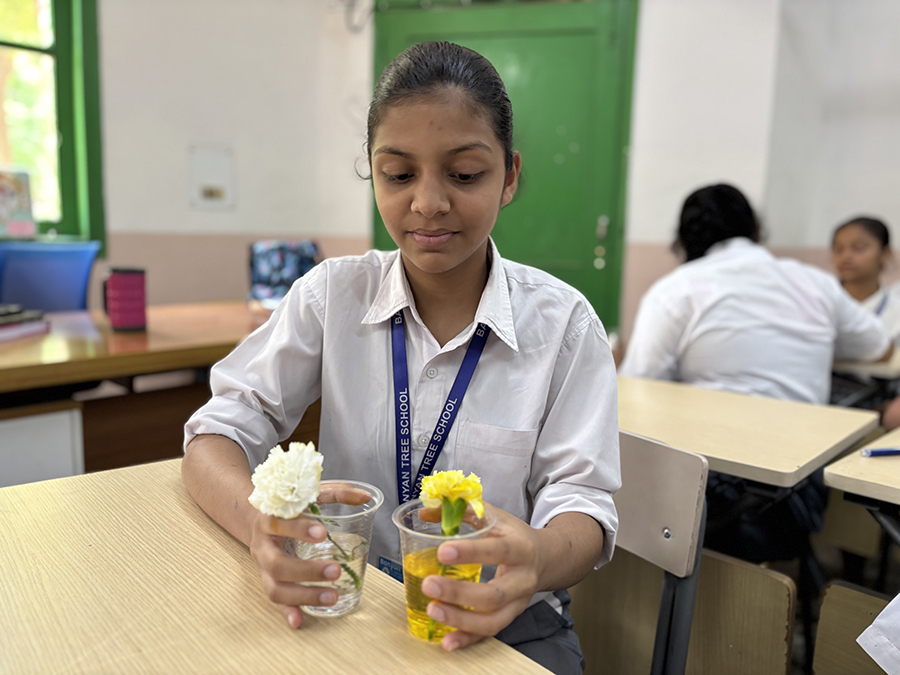
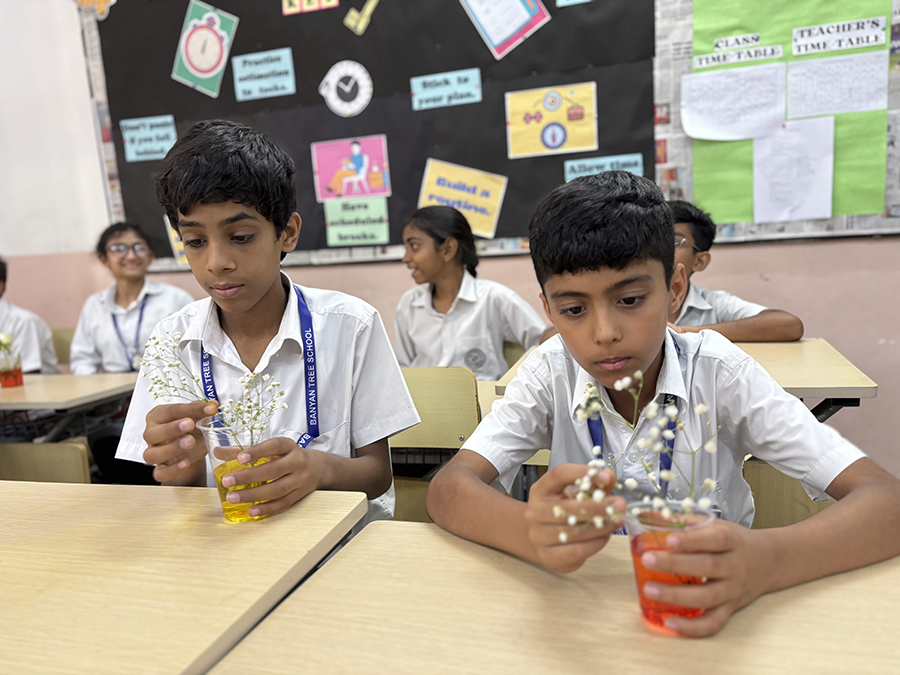
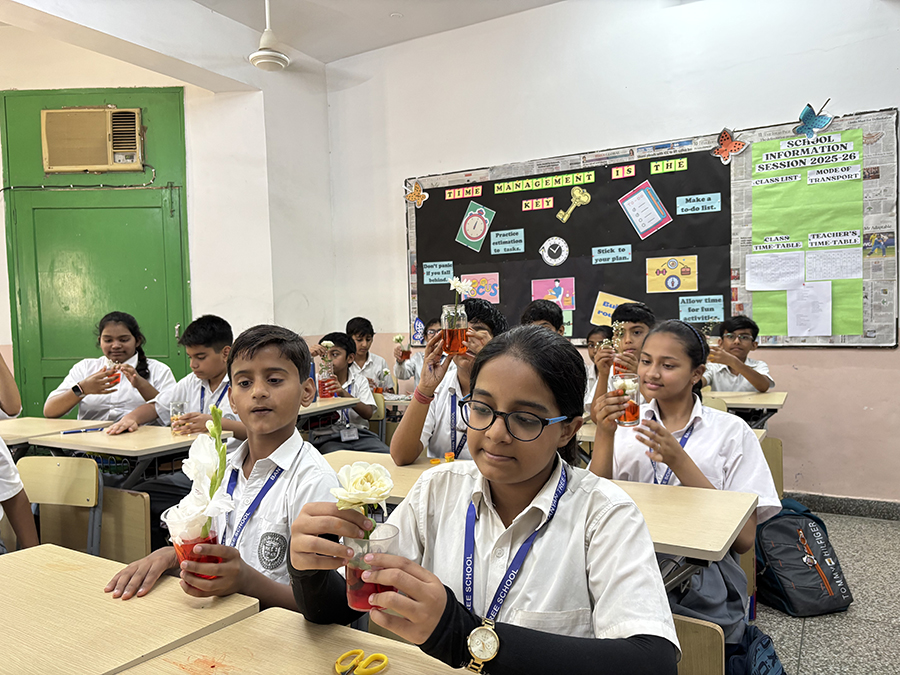
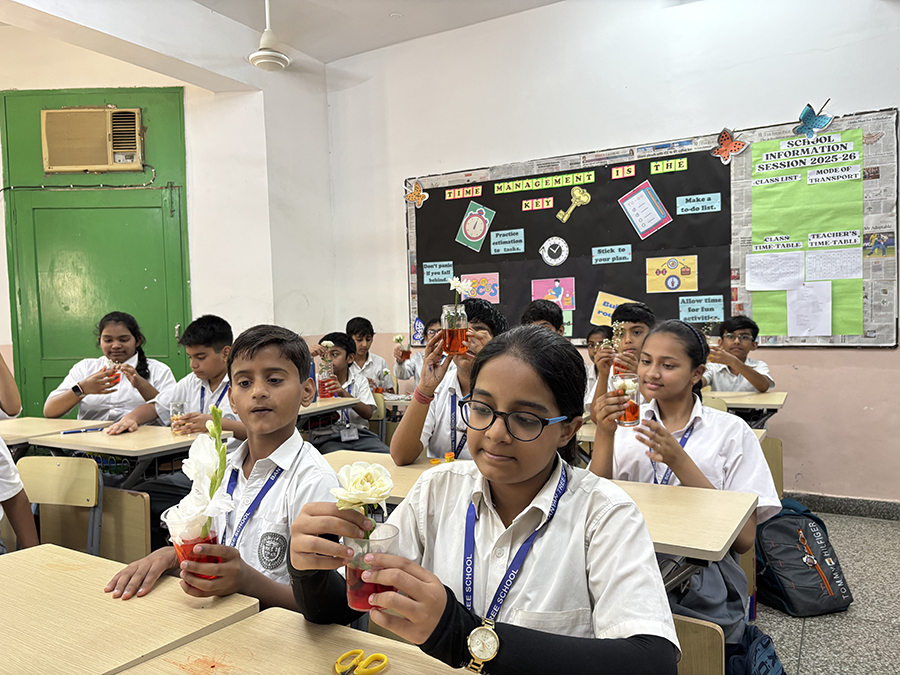
Students of Grade VII conducted a hands-on science activity to observe the process of water transport in plants. White flowers were placed in jars filled with coloured water, allowing students to visually track the movement of water through the plant’s stem. Over time, the petals changed colour, clearly demonstrating how water travels via xylem tissues from roots to leaves. This experiment helped students understand the role of xylem in transporting water and minerals. The activity sparked curiosity and enhanced conceptual clarity through direct observation, reinforcing theoretical learning with an engaging, real-world demonstration.