Introduction:
During the early years, children make sense of the world by engaging their senses. At Banyan Tree School Chandigarh, recognized among the Top 10 Schools in Chandigarh Tricity where every sound, texture, scent, and movement becomes a crucial part of a child’s developmental journey. Sensory-based activities play a powerful and transformative role in early learning, especially in environments that prioritize holistic growth. Many reputed schools within this group integrate sensory play into their early-years curriculum because it significantly supports cognitive, social, emotional, and physical development.
These sensory-rich experiences are far more than enjoyable moments—they are essential to helping children build a deeper awareness of their environment. Through purposeful sensory exploration, children strengthen brain connections, enhance problem-solving abilities, improve motor coordination, and lay the groundwork for future academic success. This article takes a closer look at how sensory activities fuel cognitive and motor development and why they are considered foundational in high-quality early childhood programs.
About Us:
Our school embraces sensory-rich learning as a vital part of early childhood development. From textured play stations and water-and-sand tables to art corners, music sessions, movement zones, and nature-themed exploration areas — we provide children a multisensory environment to build thinking, coordination, balance, and creativity. Complemented by fun extracurriculars such as gardening club, clay-modelling workshops, music and rhythm classes, and outdoor play sessions, every child gets to explore, touch, hear, move, and learn in a holistic way. Seasonal events — like sensory-play fairs, art exhibitions, and nature walks — turn everyday learning into celebratory experiences. Through sensory and motor-rich activities, our goal is to develop confident, curious learners with sharpened cognition, refined motor skills, and a lifelong love for hands-on discovery.
1. Why Sensory Activities Matter in Early Childhood Development
Children naturally learn through exploration. Sensory activities encourage this curiosity by engaging one or more senses—touch, smell, sight, taste, movement, balance, or hearing. When children interact with sensory materials, they are actively constructing meaning through hands-on experiences.
Key reasons sensory activities are vital:
- They stimulate brain development.
- They improve focus and attention span.
- They strengthen motor systems and muscle coordination.
- They support emotional regulation and self-soothing.
- They encourage investigation, creativity, and problem-solving.
The early years are a critical period for brain growth, making sensory activities crucial for establishing strong cognitive foundations.
2. How Sensory Play Builds Cognitive Skills
Cognitive development involves how children think, reason, solve problems, and understand the world. Sensory experiences form the basis of these abilities by enabling the brain to process information.
a. Strengthening Neural Connections
Every sensory experience—feeling sand, listening to music, or smelling flowers—activates multiple areas of the brain. Repeated exposure strengthens neural pathways, helping children build advanced thinking processes.
b. Enhancing Memory and Recall
Sensory play often involves repeated tasks. This repetition improves short-term and long-term memory, helping children remember patterns, sequences, and instructions.
c. Improving Problem-Solving Skills
Activities like sorting objects, mixing colors, or building structures encourage children to:
- Hypothesize
- Test ideas
- Observe outcomes
- Adjust strategies
These foundational skills become building blocks for logical reasoning and academic performance later in life.
d. Encouraging Language Development
Sensory experiences motivate children to describe what they feel, see, hear, or smell. This enhances vocabulary, communication skills, and expressive language abilities.
3. Sensory Activities and Their Impact on Motor Development
Motor skills determine how children move their bodies, control their muscles, and coordinate tasks. Sensory activities support both gross motor skills (large muscle groups) and fine motor skills (small, precise movements).
a. Fine Motor Skill Development
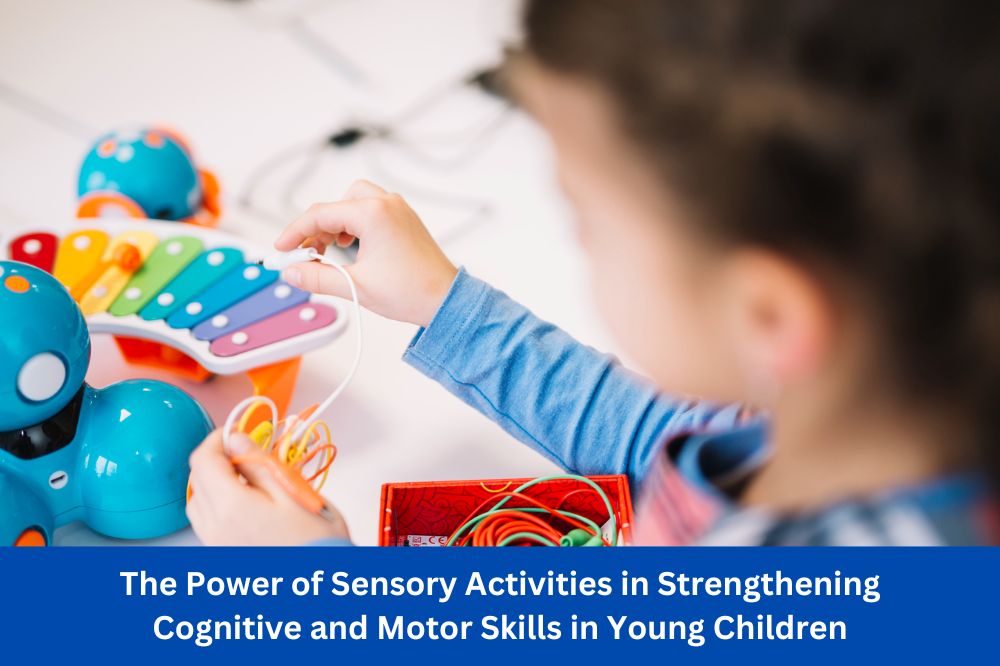
Handling sensory materials like beads, clay, sand, or water builds finger strength and hand-eye coordination. These skills are essential for:
- Writing
- Drawing
- Cutting
- Holding objects
- Buttoning clothes
b. Gross Motor Skill Development
Large-scale sensory activities such as jumping on textured mats, balancing on beams, or dancing help children develop:
- Balance
- Coordination
- Core strength
- Spatial awareness
c. Strengthening Muscle Memory
Repetitive sensory tasks—like kneading dough or pouring water—improve muscle control and precision.
d. Boosting Hand Dominance
Sensory experiences help children discover which hand they naturally prefer, aiding the development of hand dominance essential for writing.
4. The Science Behind Sensory Integration
Sensory integration refers to how the brain processes and organizes sensory information. When children experience sensory activities, they learn to respond appropriately to different stimuli. This ability helps them stay focused, calm, and attentive.
Benefits of strong sensory integration:
- Better emotional regulation
- Improved attention span
- Reduced hyperactivity
- Stronger social interactions
- Increased readiness for classroom tasks
A child who can process sensory information effectively performs better academically and behaviorally.
5. Types of Sensory Activities That Enhance Early Learning
High-quality learning environments use a wide range of sensory activities designed to support holistic development.
a. Tactile Play
Activities involving touch, such as:
- Sandboxes
- Water tables
- Clay molding
- Finger painting
These help children understand textures, temperatures, and shapes.
b. Visual Sensory Play
Activities that stimulate sight include:
- Color matching
- Light tables
- Pattern recognition
- Visual puzzles
These enhance visual discrimination and cognitive processing.
c. Auditory Sensory Play
Sound-based activities such as:
- Musical play
- Listening to nature sounds
- Rhythm exercises
- Sound matching games
These strengthen listening, concentration, and auditory memory.
d. Olfactory and Taste Experiences
Smelling different scents or tasting safe, child-friendly foods helps children:
- Build sensory awareness
- Develop vocabulary
- Understand preferences
e. Vestibular Activities (Balance and Movement)
Activities include:
- Swings
- Balance boards
- Jumping games
- Dance
These help with coordination, stability, and spatial orientation.
f. Proprioceptive Activities (Body Awareness)
Examples include:
- Carrying weighted objects
- Climbing
- Pushing/pulling activities
These activities promote muscle strength and body control.
6. Sensory Play as a Pathway to Emotional Development
Besides cognitive and motor skills, sensory activities significantly influence emotional intelligence.
How sensory play supports emotional growth:
- Reduces anxiety and stress
- Helps children express feelings
- Encourages relaxation and calmness
- Builds frustration tolerance
- Enhances self-confidence
Activities like squeezing stress balls or running fingers through sand can soothe children and help them self-regulate.
7. Social Development Through Sensory Experiences
Many sensory activities are collaborative, creating opportunities for peer interaction.
Social benefits include:
- Improved sharing and turn-taking
- Stronger communication skills
- Cooperative problem-solving
- Respect for other children’s choices
- Enhanced empathy
Sensory stations become natural spaces for teamwork and social bonding.
8. Integrating Sensory Play in Early Learning Classrooms
Institutions recognized among the schools are known for designing environments rich in sensory materials. These classrooms typically incorporate:
a. Sensory Corners
Dedicated spaces with:
- Water tubs
- Textured objects
- Light panels
- Natural materials
b. Outdoor Sensory Zones
Gardens, sand pits, and play areas where children explore nature freely.
c. Rotational Sensory Stations
Different sensory tables used throughout the week to reinforce varied experiences.
d. Teacher-Led Sensory Activities
Guided tasks that help children make meaningful connections between sensory input and real-world learning.
9. How Sensory Play Supports Early Literacy Skills
Sensory activities lay the foundation for reading and writing.
Key literacy-boosting benefits:
- Strengthened hand muscles for writing
- Enhanced letter recognition through tactile tracing
- Better phonemic awareness using sound-based games
- Improved focus during story sessions
Children who engage in sensory play often develop stronger communication and comprehension skills.
10. Sensory Activities and Early Math Development
Math is rooted in patterns, measurements, shapes, and comparisons—all of which are strengthened through sensory experiences.
Math concepts learned through sensory play:
- Counting (e.g., counting beads)
- Sorting and categorizing
- Understanding size and volume
- Identifying shapes
- Recognizing patterns
These foundational abilities make formal math easier to grasp later.
11. Sensory Activities and Creativity
Creative thinking expands when children explore materials freely.
Ways sensory play enhances creativity:
- Encourages open-ended thinking
- Supports experimentation
- Helps children express imagination
- Builds flexible problem-solving skills
Activities like mixing colors, building with clay, or creating sensory art stimulate creative growth.
12. Sensory Play for Children with Special Needs
Sensory activities are especially powerful for learners with developmental delays or sensory processing challenges.
Benefits include:
- Increased attention
- Improved communication
- Reduced sensory overload
- Enhanced social engagement
- Better body control
Sensory-based interventions often become part of personalized learning plans.
13. Role of Educators in Facilitating Sensory Development
Teachers play a vital role in designing meaningful sensory experiences.
Educator responsibilities include:
- Observing children’s sensory preferences
- Introducing diverse materials
- Ensuring safety and hygiene
- Encouraging exploration without interference
- Connecting sensory experiences to academic themes
A thoughtful approach ensures maximum developmental growth.
14. Sensory Activities at Home – Tips for Parents
Parents can also support sensory development using simple, everyday materials.
Home-friendly sensory ideas:
- Rice or pasta bins
- Play dough
- Nature walks
- Water play in a tub
- Sorting household objects
Consistency between home and school enhances cognitive and motor development further.
15. Long-Term Benefits of Sensory Play
Sensory activities shape not just early childhood but long-term learning outcomes.
Long-term advantages:
- Better critical thinking
- Stronger memory retention
- Enhanced emotional resilience
- Improved academic performance
- Higher creativity and innovation skills
Children who engage regularly in sensory-rich environments develop stronger brain architecture.
Conclusion:
Sensory activities are a powerful force in early childhood development. They ignite curiosity, strengthen cognitive abilities, refine motor skills, and build emotional resilience. When children are exposed to rich, thoughtfully designed sensory experiences, they develop the foundational skills necessary to excel academically, socially, and physically.
Many renowned institutions recognized among the schools understand this importance and integrate sensory learning into their early childhood programs. Sensory exploration becomes a joyful pathway through which young learners grow into confident, capable, and creative individuals.
FAQs:
Q. 1 What are sensory activities in early education?
Ans : These are hands-on experiences using touch, sound, sight, and movement to enhance learning.
Q. 2 How do sensory tasks support brain development?
Ans : They stimulate neural connections that improve memory, reasoning, and focus.
Q. 3 Why are sensory activities important for motor skills?
Ans : They strengthen hand–eye coordination, balance, and fine-motor control.
Q. 4 Are sensory activities suitable for all age groups?
Ans : Yes, they can be adapted safely for toddlers, preschoolers, and early primary learners.
Q. 5 Can sensory play help shy or anxious children?
Ans : It offers a calm, exploratory environment that boosts confidence and social comfort.
Q. 6 How do teachers integrate sensory learning into classrooms?
Ans : Through sand play, art, music, water exploration, movement games, and tactile materials.