Introduction:
In today’s rapidly evolving educational landscape, progressive teaching methods have become essential in shaping well-rounded, confident learners. At Banyan Tree School Chandigarh, the Top 10 Schools in Tricity where these educators strive to meet the diverse needs of students, these innovative approaches aim to foster critical thinking, creativity, and self-assurance—key qualities that prepare children for the challenges of the modern world.
About Us:
Banyan Tree School embraces progressive teaching methods that focus on the child’s overall development. By incorporating experiential learning, project-based tasks, and personalized instruction, we nurture confident learners who are not just academically prepared but also emotionally and socially strong. Our approach helps children connect theory with real-world scenarios, empowering them to tackle challenges with resilience and independence.
The Importance of Confidence in Learning
Confidence is a critical aspect of a student’s development, particularly in the early years of schooling. When students feel confident, they are more likely to participate actively in class, express their opinions, and take intellectual risks. Confidence helps children believe in their ability to learn, overcome challenges, and excel in various areas of life, not just academically.
What Are Progressive Teaching Methods?
Progressive teaching methods are educational strategies that focus on active learning, collaboration, critical thinking, and student agency. These methods aim to move away from traditional, teacher-led instruction and instead place students at the center of the learning process. Below are some of the key characteristics and techniques associated with progressive teaching:
- Student-Centered Learning : In a progressive classroom, the emphasis shifts from the teacher being the sole authority to students taking responsibility for their learning. Teachers act as facilitators, guiding students through problem-solving processes, encouraging collaboration, and allowing students to explore topics based on their interests and curiosities. This shift helps students feel more engaged and in control of their learning, boosting their confidence.
- Collaborative Learning : Progressive teaching values teamwork and collaboration. Group work, discussions, and peer-to-peer learning activities encourage students to learn from one another, exchange ideas, and build mutual respect. Collaborative learning fosters a sense of community in the classroom and teaches students valuable social and communication skills that increase their confidence in expressing their thoughts and opinions.
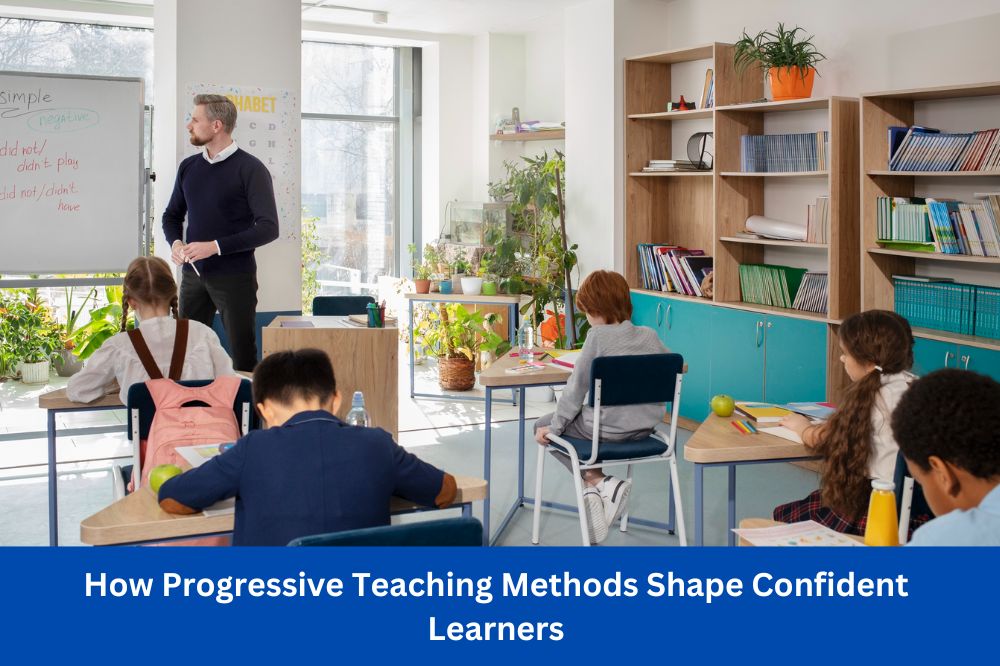
How Progressive Teaching Methods Shape Confident Learners
Progressive teaching methods are transformative in shaping confident learners by providing them with the tools and opportunities to develop self-assurance, autonomy, and resilience. Here’s how these methods help in shaping confident students:
1. Encouraging Ownership of Learning : When students are encouraged to take ownership of their learning, they become more invested in their education. Progressive teaching methods such as project-based learning, inquiry-based learning, and student-directed activities give students the autonomy to choose topics they are passionate about, research independently, and set their own learning goals. This sense of agency fosters confidence, as students see themselves as capable learners who can make decisions and take responsibility for their progress.
2. Fostering Critical Thinking and Problem-Solving Skills : Critical thinking is at the heart of progressive teaching. By encouraging students to analyze, question, and evaluate information rather than memorize facts, progressive teaching methods help students develop the cognitive tools they need to approach problems creatively. When students are taught to think critically, they gain confidence in their ability to understand complex issues, think independently, and come up with innovative solutions.
3. Providing Opportunities for Failure and Growth : Progressive teaching methods create a learning environment where failure is viewed as an opportunity for growth rather than something to be feared. When students are encouraged to take risks, try new ideas, and learn from their mistakes, they develop resilience and confidence. They begin to understand that learning is a process, and making mistakes is a natural part of that process. This mindset shift helps students approach challenges with confidence, knowing that they can learn and improve from each experience.
The Role of Teachers in Fostering Confidence
Teachers are the facilitators of the learning process, and their role is crucial in nurturing confident learners. While students play an active role in their education, teachers help guide, support, and inspire them. In a progressive learning environment, teachers serve as mentors who encourage students to express their ideas, take risks, and develop a sense of ownership over their learning.
Teachers can help foster confidence by:
- Creating a Safe Learning Environment: Students must feel safe to share their thoughts and make mistakes. A classroom where students are encouraged to ask questions and try new things without fear of judgment helps build confidence.
- Providing Positive Reinforcement: Praise, constructive feedback, and recognition of students’ efforts and accomplishments contribute to their self-esteem and confidence.
- Encouraging Growth Mindset: Teachers who encourage a growth mindset—where challenges are seen as opportunities for improvement—help students embrace challenges with confidence.
Conclusion:
Progressive teaching methods are reshaping the educational landscape by creating environments that promote curiosity, critical thinking, and self-confidence in learners. By prioritizing student-centered learning, collaboration, and hands-on experiences, these methods empower students to become independent, resilient, and confident individuals.
As education continues to evolve, the role of progressive teaching methods in fostering confident learners will become even more critical. With the right approach, educators can help shape the next generation of thinkers, innovators, and leaders—individuals who are not only academically successful but also confident in their ability to tackle challenges, explore new ideas, and contribute meaningfully to the world around them.
FAQs:
Q. 1 What are progressive teaching methods?
Ans : Progressive teaching methods focus on student-centered learning, critical thinking, collaboration, and real-world problem-solving, which help students become confident, independent learners.
Q. 2 How do progressive teaching methods impact a student’s confidence?
Ans : By promoting hands-on learning, student ownership, and collaboration, progressive methods help students develop the confidence to think critically, solve problems, and take initiative in their learning.
Q. 3 Can progressive teaching methods benefit shy students?
Ans : Yes! Progressive methods, such as collaborative learning and project-based activities, encourage shy students to participate in a non-threatening, supportive environment, boosting their confidence.
Q. 4 How do teachers use progressive teaching methods to build self-confidence in students?
Ans : Teachers foster a growth mindset by providing constructive feedback, praising effort, and encouraging active participation, which builds students’ confidence in their abilities.
Q. 5 What is the role of student choice in boosting confidence?
Ans : Allowing students to make choices in their learning process—like selecting project topics or learning paths—gives them autonomy and boosts their confidence in decision-making and problem-solving.
Q. 6 How can progressive methods prepare students for future challenges?
Ans : By developing critical thinking, creativity, and collaboration skills, progressive methods equip students with the confidence and abilities needed to tackle real-world challenges and future careers.