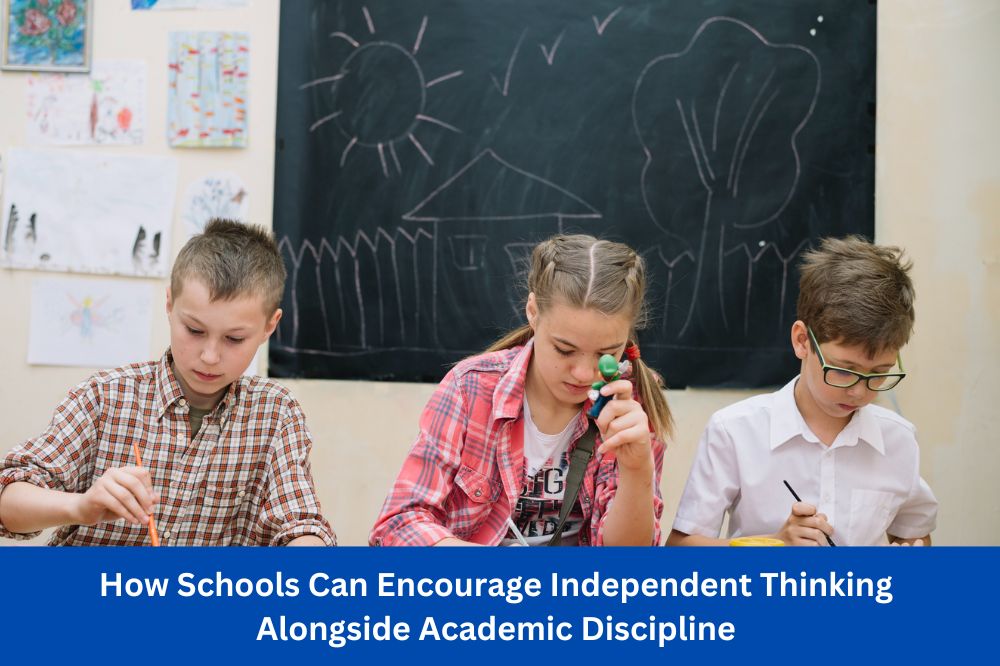
Introduction:
Selecting the right school is one of the most significant decisions parents make in shaping their child’s educational path. At Banyan Tree School Chandigarh, Recognised Among the Top 10 CBSE Schools in Chandigarh, families often navigate a wide range of curricula and education boards available today. With so many choices, parents carefully compare academic structure, long-term value, and future readiness. Among these options, the CBSE (Central Board of Secondary Education) continues to stand out as a trusted and widely preferred board for delivering consistent, high-quality education.
This article explores the key factors that make CBSE schools a popular choice for parents, highlighting their strengths when compared with other educational boards, including international and state systems. It also draws upon the established reputation and academic advantages associated with CBSE institutions to explain why so many families confidently choose this curriculum for their children’s holistic development and future success.
About Us:
Banyan Tree School follows a strong CBSE framework that supports academic excellence while encouraging all-round development. The learning environment focuses on conceptual clarity, problem-solving skills, and disciplined study habits, helping students build a solid foundation for future learning. Beyond academics, students engage in a wide range of extracurricular activities including sports, dance, music, theatre, literary clubs, and environmental initiatives. Annual events such as sports meets, science exhibitions, cultural festivals, and inter-house competitions provide platforms for leadership and teamwork. Teachers create a supportive atmosphere where curiosity is encouraged and values are nurtured. This balanced approach ensures students grow not only as achievers in academics but also as confident, responsible individuals—making CBSE education a preferred choice for parents seeking long-term success for their children.
Understanding the Foundation: What Is CBSE?
The CBSE curriculum is a nationally recognized educational board in India that emphasizes comprehensive learning, continuous assessment, and standardized expectations across the country. Known for its balanced academic framework, CBSE has been a mainstay in Indian education for decades. A large number of schools affiliated with this board emphasize not just academic excellence but also holistic development.
Parents often begin their school search using phrases such as CBSE School because they want institutions that deliver proven academic rigor, structured planning for achievement, and a curriculum that aligns with competitive entrance examinations.
1. Balanced Curriculum That Promotes All-Round Development
CBSE stands out for offering a well-rounded curriculum that balances academic subjects with co-curricular and life skills learning. Unlike some boards that focus predominantly on rote memorization, this framework encourages conceptual understanding, analytical thinking, and practical application.
The syllabus is thoughtfully designed to:
- Foster critical thinking.
- Encourage problem-solving abilities.
- Promote collaborative and individualized learning.
Most parents appreciate that children are not just preparing for exams but also learning to apply knowledge in real-world contexts.
2. Uniformity and National Recognition
Parents who relocate frequently — whether due to jobs or other commitments — often prefer a curriculum that offers consistency. CBSE’s standardized curriculum ensures that:
- Syllabi remain largely the same across India.
- Students can transition between schools without academic disruption.
- Expectations and competencies are clearly defined for each grade.
This uniformity reduces stress for both students and parents during transfers, making it highly desirable for mobile families.
3. Structured Focus on Competitive Exams
One of the most compelling reasons families opt for CBSE education is its alignment with national entrance exams like:
- JEE (Joint Entrance Examination)
- NEET (National Eligibility cum Entrance Test)
The emphasis on subjects like Mathematics and Science, along with problem-solving strategies, means that students are naturally well-prepared for these higher education pathways without needing excessive external coaching. Parents see this as a long-term advantage — a curriculum that keeps doors open to premier institutions for future careers.
4. Continuous and Comprehensive Evaluation (CCE) System
The CBSE board introduced the Continuous and Comprehensive Evaluation (CCE) framework to reduce exam stress and encourage ongoing learning. Unlike a system that focuses solely on year-end examinations, CCE assesses:
- Scholastic achievements
- Co-scholastic areas like arts, behavior, and life skills
This evaluation approach ensures that children receive regular feedback and grow in multiple dimensions rather than just academically.
5. Holistic Development Through Co-Curricular Activities
CBSE schools place strong emphasis on co-curricular engagement. Activities like:
- Sports
- Music and performing arts
- Debates and public speaking
- Science and math clubs
- Cultural events
help students develop confidence, team spirit, leadership skills, creativity, and resilience. Parents increasingly value schools that nurture not just academic success, but also emotional and social intelligence.
6. Affordable and Accessible Quality Education
Another key reason families trust CBSE schools is the balance between quality and accessibility. Unlike some curriculum options that may be cost-prohibitive for many parents, a large number of CBSE schools offer high-quality education at reasonable fee structures, democratizing access for a broader segment of families. Because the board is widely adopted, resources such as textbooks, reference materials, and teacher training are ubiquitous and affordable.
7. Emphasis on Language and Communication Skills
Effective communication is a foundational skill in the modern world. CBSE schools emphasize:
- Strong English language skills
- Proficiency in the regional language
- Opportunities to learn additional languages
From grammar and literature to speech and writing, language development is integrated across the curriculum. This helps children build strong written and verbal communication skills from early years, which is a significant advantage in academics and life beyond school.
8. Teacher Training and Professional Development
A key strength noted among CBSE Schools and similar reputed institutions is their focus on teacher quality. CBSE invests in:
- Regular training programs
- Workshops on modern pedagogical techniques
- Continuous professional development
Teachers trained under these initiatives are equipped to deliver lessons that are engaging, student-centered, and aligned with contemporary education standards.
9. Wide Resource Network and Technology Integration
CBSE guidelines encourage schools to use technology as a tool for enhanced learning. Schools often feature:
- Smart classrooms
- Audio-visual aids
- Digital libraries
- Online learning platforms
Integration of digital tools makes learning interactive and prepares children for a technologically driven future.
10. Focus on Ethics, Values, and Life Skills
In addition to academics, the curriculum integrates modules that build character, values, and life skills. Ethics and values are part of classroom discussion, helping students grow as responsible, compassionate individuals. Life skills such as decision-making, teamwork, and adaptability are embedded into daily learning, making students resilient and socially conscious.
11. Vibrant School Culture That Celebrates Diversity
Diversity enriches school life. Many CBSE schools — especially well-known ones — foster inclusive cultures where:
- Students from varied backgrounds best learning
- Cultural exchanges occur organically
- Festivals and global days are celebrated with enthusiasm
This exposure helps children become empathetic, socially aware, and comfortable in diverse settings.
12. Parent-School Partnership
Open communication and collaboration between parents and educators are essential for student success. Reputed CBSE schools maintain strong communication channels through:
- Regular parent-teacher meetings
- Progress reports with detailed feedback
- Workshops and seminars for parents
- Transparent academic policies
This partnership enhances trust, aids student support, and creates a shared vision for a child’s growth.
13. Focus on Health, Safety, and Well-Being
Beyond academics, schools understand the importance of ensuring a safe and healthy environment. Infrastructure such as:
- Secure school premises
- Medical facilities with trained staff
- Counseling and mental health support
- Structured safety protocols
gives parents peace of mind, knowing their children are cared for in all aspects of school life.
14. Strong Alumni Networks and Long-Term Outcomes
Many respected CBSE schools have active alumni communities that support current students through:
- Mentoring initiatives
- Career guidance
- Networking opportunities
This long-term community connection benefits students as they transition to higher education and future careers.
15. Focus on Sustainability and Global Citizenship
Modern education recognizes the importance of sustainability and global responsibility. CBSE schools often include:
- Eco-clubs
- Awareness campaigns
- Social outreach programs
These initiatives help students develop environmental consciousness and a global mindset — qualities that matter in today’s interconnected world.
16. Structured Support for Academic Excellence
Academic rigor is balanced with support systems that help all learners succeed. Schools adopt practices like:
- Remedial classes
- Peer learning groups
- Special attention for differently-abled learners
- Regular assessments to identify gaps early
This structured support ensures children stay confident and motivated throughout their learning journey.
17. Career Counseling and Future Planning
Parents appreciate schools that help children think beyond board exams. Well-established institutions offer:
- Career counseling sessions
- Aptitude assessments
- Exposure to varied career paths
- Guidance on higher education choices
This early insight helps learners make informed decisions about their future.
18. Recognition and Accreditation
The CBSE board’s reputation itself carries weight, but schools that consistently appear among CBSE School often demonstrate:
- High academic results
- National recognition
- Awards in co-curricular excellence
- Excellence in sports and arts
Such recognition reassures parents that they are choosing an institution committed to quality.
19. Financial Planning and Fee Transparency
Good schools maintain transparency in fees and financial policies. They provide clear communication about:
- Tuition fees
- Additional activity costs
- Payment schedules
- Scholarship or concession options
This clarity helps families plan finances confidently and avoid surprises.
20. Adaptability to Modern Educational Demands
Education is evolving rapidly with new pedagogies, digital tools, and future skills. CBSE schools have shown adaptability by:
- Updating curricula with contemporary relevance
- Embracing blended learning models
- Introducing STEM, coding, and innovation labs
This flexibility ensures students remain competitive and future ready.
Conclusion:
It’s clear why so many parents view the CBSE curriculum as a sound choice for their children’s education. From balanced academic excellence to holistic personality development, from structured evaluations to future-focused learning, CBSE schools offer a compelling blend of tradition and innovation. Keywords like CBSE School reflect how parents search for institutions that embody these strengths — a testament to the trust and value associated with this board.
Whether families prioritize consistency across relocations, rigorous preparation for competitive exams, or an environment that fosters life skills and character, CBSE schools continue to meet these expectations. Choosing the right school isn’t just about rankings or recognition — it’s about finding an ecosystem where a child can thrive academically, socially, emotionally, and ethically.
Parents who explore CBSE education find that it not only prepares learners for the next steps in education but also shapes them into confident, responsible, and capable individuals ready to navigate a complex and dynamic world.
FAQs:
Q. 1 Why do parents prefer the CBSE curriculum for their children?
Ans : It offers a structured, nationally recognised framework with strong academic foundations.
Q. 2 How does CBSE prepare students for competitive exams?
Ans : Its curriculum focuses on conceptual clarity and application-based learning.
Q. 3 Is CBSE suitable for students who move cities frequently?
Ans : Yes, its uniform syllabus across India ensures continuity in learning.
Q. 4 Does CBSE support overall personality development?
Ans : The curriculum integrates academics with sports, arts, and life skills education.
Q. 5 How does CBSE promote analytical thinking?
Ans : By encouraging problem-solving, logical reasoning, and competency-based assessments.
Q. 6 Are CBSE schools aligned with future career readiness?
Ans : Yes, they focus on foundational skills essential for higher education and careers.