Introduction:
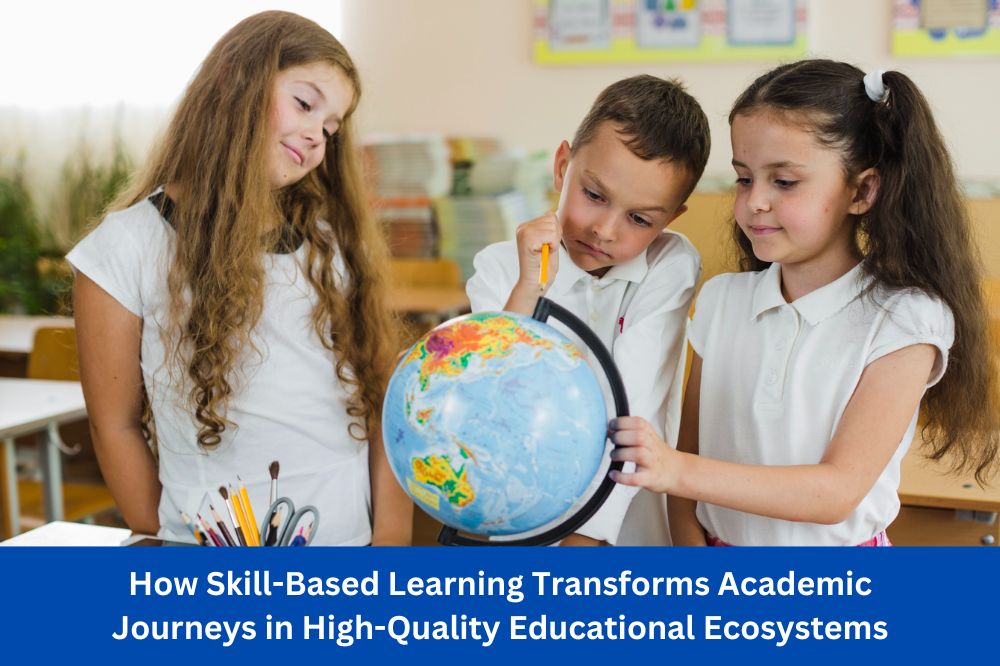
In today’s fast-changing world, education has expanded far beyond textbooks, exams, and theoretical concepts. At Banyan Tree School Chandigarh, the Best Private Schools in Chandigarh, the learning environment has evolved dramatically as schools across the country adopt holistic and innovative teaching practices that equip students for real-life challenges. Among these modern approaches, skill-based learning has emerged as a transformative method that high-quality educational ecosystems rely on to create meaningful, future-ready academic journeys.
Leading private institutions consistently demonstrate that true academic excellence is built not only on strong subject knowledge but also on practical skills, critical thinking, creativity, emotional resilience, and real-world application. These schools have shifted away from traditional, one-dimensional learning models toward dynamic frameworks that empower students to explore, apply, and refine essential skills throughout their formative years.
This article highlights how skill-based learning reshapes academic pathways and helps develop confident, capable, and self-reliant learners prepared to thrive in an ever-evolving world.
About Us:
We are committed to nurturing young minds through a dynamic blend of academic excellence and real-world skill development. Our learning environment encourages exploration, problem-solving, collaboration, and innovation alongside traditional studies. Beyond classroom lessons, children enjoy a rich array of extracurricular offerings — from robotics and coding clubs to creative arts, debates, and design challenges — all designed to sharpen communication, leadership, and critical-thinking skills. Regular events like inter-house competitions, science fairs, and collaborative projects showcase our students’ growth and reinforce practical learning. By embedding skill-based learning across disciplines, we strive to create confident, adaptable learners ready to thrive in any future path — academically, socially, and professionally.
1. Redefining Learning Through Practical Skills
Traditional learning typically focuses on memorizing information to score well in exams. However, skill-based learning encourages students to understand concepts deeply and apply them in real-life situations.
High-performing educational environments emphasize key skill domains such as:
- Communication Skills : Students learn to express ideas clearly, engage in discussions, present arguments, and develop confidence in public speaking. This becomes particularly essential in global collaborative environments.
- Critical Thinking and Problem-Solving : Skill-based curricula allow students to question, analyze, evaluate, and propose solutions rather than accept information at face value. Thinking beyond the obvious is encouraged from early grades.
- Collaboration and Teamwork : Group activities, projects, and experiential programs nurture teamwork—an essential skill in nearly every career and life situation.
- Creativity and Innovation : Hands-on learning, arts, design challenges, and maker activities help students explore original ideas and take calculated risks.
- Digital Literacy : From coding to using AI tools, tech skills form an essential part of modern academic pathways, enabling students to thrive in tech-integrated future workplaces.
Such skills help children navigate complex academic expectations and adapt confidently to new learning environments.
2. How Skill-Based Learning Enhances Academic Outcomes
Skill-based learning goes far beyond improving practical ability—it directly influences academic performance. Students who engage in experiential work demonstrate:
- Better Conceptual Understanding : When children see how concepts work in real life—be it science experiments or mathematical models—they retain information longer and develop genuine interest.
- Higher Engagement and Motivation : Interactive lessons, field projects, and multimedia-rich classrooms make learning enjoyable and relevant. Students no longer view lessons as forced tasks but as meaningful experiences.
- Improved Memory Retention : The brain retains information more efficiently when students learn by doing rather than by passive listening or reading.
- Greater Confidence in Assessments : With constant exposure to problem-solving, inquiry-based learning, and independent exploration, students approach exams with stronger understanding and self-belief.
Thus, skill-based education doesn’t replace academics—rather, it strengthens academic outcomes through deep, active learning.
3. Nurturing Holistic Growth in Safe, Supportive Ecosystems
Highly reputed educational setups ensure that skill-based learning complements holistic development. They focus on creating an environment where children feel safe, supported, and encouraged to take initiative.
Key elements include:
- Safe and Stimulating Classrooms : Classrooms designed with flexible seating, interactive boards, and open learning spaces help foster creativity.
- Strong Teacher–Student Relationships : Educators trained in 21st-century methodologies serve as mentors, guiding students through exploration rather than dictating answers.
- Emotional and Social Skill Programs : Activities like peer support groups, value education, and mindfulness sessions contribute to mental well-being and emotional strength.
- Progressive Assessments : Rather than relying only on tests, schools use portfolios, practical assignments, reflections, and peer evaluations to measure understanding.
All these elements combine to create ecosystems where students feel empowered to express themselves and refine skills confidently.
4. Integration of Skill-Building Across Subjects
One of the most significant advantages of skill-based education is that it is woven into every subject. For example:
- In Mathematics : Students work on budgeting exercises, measurement-based activities, data interpretation projects, and real-life calculations.
- In Science : Hands-on experiments, design thinking challenges, STEM labs, and field studies help students understand scientific principles through exploration.
- In Language Studies : Debates, creative writing, dramatics, and discussion circles nurture communication and linguistic skills.
- In Social Science : Case studies, model-making, surveys, and community-based tasks enable children to evaluate real-world scenarios.
- In ICT and Coding : Students learn programming basics, robotics, and digital tool usage to prepare for future digital landscapes.
This cross-disciplinary integration ensures that students develop practical competence that strengthens academic understanding.
5. Experiential Learning: The Core of Skill Development
Experiential learning bridges the gap between theory and practice. Schools that offer strong experiential frameworks create opportunities for students to learn actively through:
- Field Visits and Educational Tours : Exposure to industries, science centers, museums, farms, and technology hubs allows students to relate textbook concepts to real-life applications.
- Project-Based Learning (PBL) : Students work on inquiry-based projects that encourage research, creativity, and presentation skills.
- STEAM Laboratories : Combining science, technology, engineering, arts, and mathematics fosters innovation and critical thinking.
- Hands-On Workshops : From pottery and cooking to robotics and circuit-building, workshops help children discover their interests and talents.
- Real-World Problem Solving Tasks : Students brainstorm and design solutions for community issues such as environmental awareness, waste management, or water conservation.
These experiential approaches deepen engagement and fuel curiosity.
6. Fostering Future-Ready Skills for Global Citizenship
Modern schools recognize that students need more than academic knowledge to thrive in a globalized world. Skill-based learning introduces essential future skills such as:
- Leadership and Responsibility : Student councils, group projects, and event management tasks provide valuable leadership exposure.
- Adaptability and Resilience : Failure-friendly environments encourage children to learn from mistakes and adapt quickly.
- Cultural Awareness and Sensitivity : Exposure to global cultures through events, exchange programs, and literature builds empathy and understanding.
- Ethical and Environmental Responsibility : Eco-clubs, green campus initiatives, and sustainability practices promote environmentally conscious thinking.
These competencies ensure that learners become responsible global citizens capable of contributing positively to society.
7. Co-Curricular Activities as Skill-Building Engines
Skill development extends beyond academics. High-quality institutions place great emphasis on co-curricular programs that shape well-rounded personalities.
- Sports and Physical Education : Games, athletics, yoga, and training programs build discipline, teamwork, strength, and confidence.
- Visual and Performing Arts : Music, dance, theatre, and fine arts allow students to express creativity and develop aesthetic sensitivity.
- Clubs and Special Interest Groups : Science clubs, literary circles, robotics groups, nature clubs, debating societies, and coding clubs nurture talent and curiosity.
- Inter-School Events and Competitions : Participation in competitions enhances confidence, strategic thinking, collaboration, and self-discipline.
Co-curricular activities provide platforms for students to test abilities, discover passions, and grow beyond academics.
8. Building Strong Communication and Expression Skills
Communication lies at the heart of every personal and professional achievement. Skill-based learning ensures that communication training starts early and continues consistently.
Students develop:
- Strong verbal and non-verbal communication
- Effective listening skills
- Debate and discussion abilities
- Clarity in writing
- Confidence in public speaking
Workshops, assemblies, presentations, and creative writing classes further refine these skills—helping students articulate thoughts confidently and empathetically.
9. Personalized Learning Journeys for Every Child
The most progressive schools understand that each child has unique strengths and needs. Skill-based learning allows institutions to personalize academic journeys through:
- Differentiated Instruction : Teachers adapt teaching styles, resources, and pace based on individual learning patterns.
- Learning Style Identification : Whether a student is a visual learner, kinesthetic learner, or auditory learner, programs are customized accordingly.
- Individual Mentoring : Continuous guidance helps students stay motivated and overcome academic or emotional challenges.
- Flexible Learning Pathways : Students are encouraged to pursue skills and subjects that align with their personal interests and future aspirations.
This personalized approach creates confident learners who understand their abilities and work toward meaningful goals.
10. Preparing Students for Higher Education and Careers
Skill-based learning builds a strong foundation for future academic and career success. Universities and employers increasingly look for individuals with:
- Problem-solving abilities
- Critical and analytical thinking
- Team collaboration
- Creativity
- Effective communication
- Digital fluency
- Leadership qualities
By embedding these skills early on, students transition smoothly into higher education and professional environments. They not only perform well academically but also excel during interviews, internships, and real-life tasks.
Conclusion:
Skill-based learning is not just an educational trend—it is a powerful transformation that shapes independent, innovative, and emotionally strong individuals. Institutions recognized among the private schools have already adopted this forward-thinking approach, proving that meaningful learning extends far beyond traditional academics.
By prioritizing experiential learning, personalized instruction, co-curricular engagement, and future-ready skills, modern educational ecosystems empower students to craft enriched academic journeys filled with confidence, curiosity, and purpose.
As the world continues to evolve, schools that champion skill-based learning will be the ones shaping leaders, thinkers, creators, and responsible global citizens—ensuring that every child grows into a capable and compassionate changemaker of tomorrow.
FAQs:
Q. 1 What is the main benefit of skill-based learning for students?
Ans : It helps children develop problem-solving, creativity, and real-world application rather than relying only on memorization.
Q. 2 How does skill-based learning improve classroom engagement?
Ans : Activities encourage hands-on exploration, making learning active, enjoyable, and meaningful.
Q. 3 Why is skill-based learning important in early schooling?
Ans : It builds strong foundational abilities like communication, collaboration, and critical thinking from a young age.
Q. 4 Does skill-based learning help academically weak students?
Ans : Yes, because it allows every child to learn at their own pace and discover strengths beyond textbooks.
Q. 5 How do teachers support skill-based development?
Ans: Educators design structured tasks, projects, and interactive sessions that nurture individual capabilities.
Q. 6 Can skill-based learning benefit future career readiness?
Ans : Absolutely—skills like adaptability, innovation, and decision-making prepare learners for tomorrow’s evolving careers.