Introduction:
In today’s fast-evolving world, academic achievement alone is no longer sufficient. Employers, universities, and global institutions are placing increasing emphasis on critical thinking, creativity, problem-solving, and innovation. At Banyan Tree School Chandigarh, the Top 10 School in Chandigarh where these are the core competencies that shape independent, adaptive, and future-ready learners. Within India’s diverse education ecosystem, the Central Board of Secondary Education (CBSE) has made significant strides in integrating these essential 21st-century skills into its curriculum and pedagogy.
The institutions are now reshaping their learning environments to foster not just intellectual development, but also curiosity, analytical ability, and imaginative thinking. This article explores how CBSE-affiliated schools are creating a generation of critical thinkers and creative problem solvers—and why this shift is crucial for students’ personal, academic, and professional success.
About Us:
As a leading CBSE-affiliated institution, Banyan Tree School, Chandigarh is committed to fostering critical thinking and creativity through inquiry-based learning, open discussions, and interdisciplinary projects. We empower students to question, analyze, and ideate with confidence. Through MUNs, debates, literary fests, art competitions, and design challenges, our learners are exposed to real-world scenarios and collaborative problem-solving. Signature events like the Expression Series and Global Perspective Week help cultivate empathy, innovation, and ethical reasoning. We prepare young minds to navigate the complexities of the modern world with courage, clarity, and creativity.
1. Why Critical Thinking and Creativity Matter More Than Ever
As automation and artificial intelligence redefine industries, the skills that remain uniquely human—such as creativity, emotional intelligence, reasoning, and judgment—are becoming more valuable. Education systems must evolve from rote memorization to fostering inquiry-based learning.
Benefits of cultivating these skills include:
- Better decision-making and problem-solving abilities
- Stronger communication and collaboration skills
- Increased innovation and adaptability
- Confidence in facing real-world challenges
CBSE schools are increasingly aligning with this need by integrating skill-based learning into their educational framework.
2. How the CBSE Curriculum Encourages Higher-Order Thinking
The CBSE framework is designed to go beyond textbook learning. It promotes conceptual understanding, application-based learning, and interdisciplinary exploration. This naturally creates an environment where analytical thinking and creativity can flourish.
Curriculum highlights:
- Focus on learning outcomes and competency-based education
- Real-life problem scenarios in Mathematics and Science
- Inquiry-based questions in Social Studies and Languages
- Open-ended project work and research assignments
The curriculum is being restructured to promote skills over marks, preparing students not just for exams, but for life.
3. Classroom Strategies That Inspire Creative Exploration
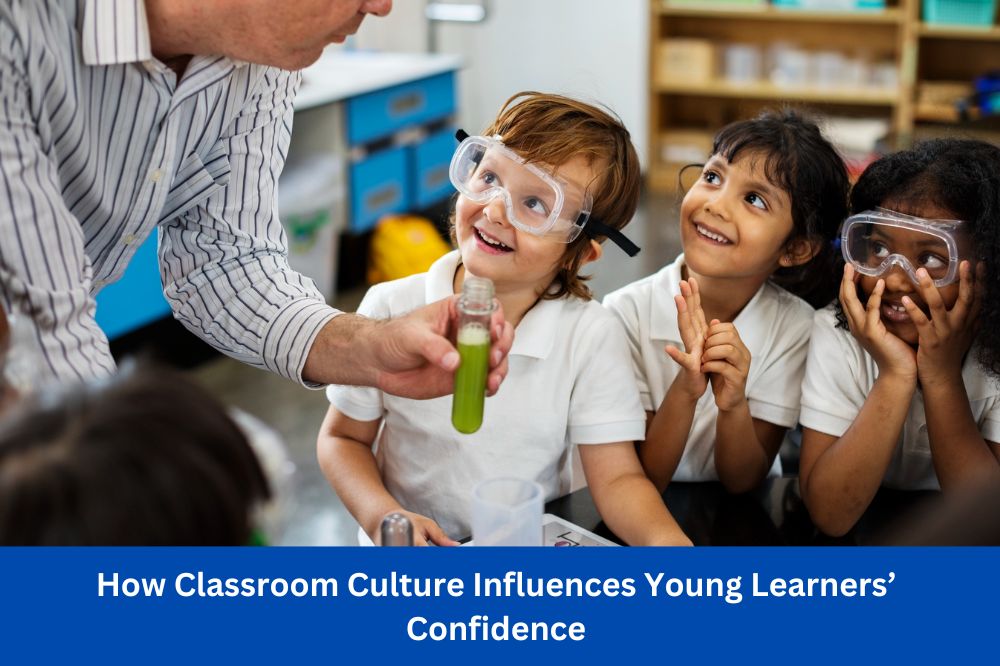
In the best CBSE classrooms, students aren’t passive recipients of knowledge—they are active participants. Teachers adopt pedagogical approaches that encourage critical questioning, brainstorming, and imagination.
Examples include:
- Think-Pair-Share discussions to promote reflective thinking
- Mind maps and visual storytelling to support ideation
- Role-playing and simulations for experiential learning
- Open-ended questions that require synthesis, not recall
Such teaching strategies help students move from “what to think” to “how to think.”
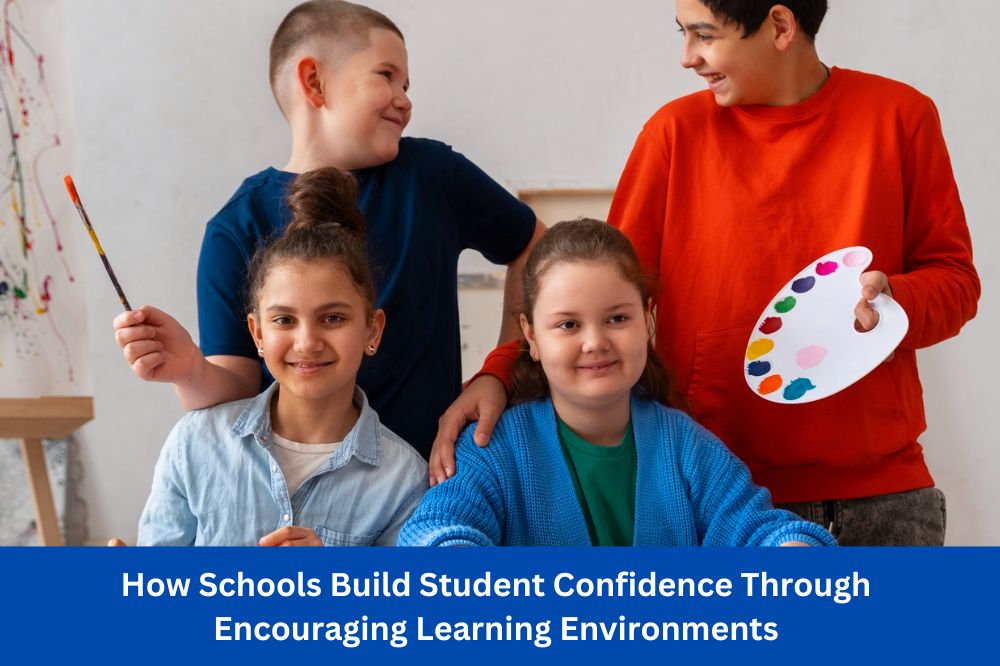
4. Use of Art, Music, and Drama in Academic Integration
CBSE schools are also increasingly using co-curricular domains like art, music, and theatre to enhance creativity and divergent thinking. These subjects are not treated as extras, but as essential tools for holistic education.
Impact of creative arts on learning:
- Encourages lateral thinking and unique perspectives
- Strengthens emotional expression and empathy
- Enhances memory retention and conceptual clarity
- Builds storytelling and communication skills
When students are encouraged to express themselves creatively, they also become better thinkers and learners.
5. Project-Based Learning and Experiential Tasks
One of the most powerful methods for developing critical thinking is project-based learning (PBL). It engages students in solving real-world problems and encourages research, experimentation, and teamwork.
Features of PBL in CBSE schools:
- Interdisciplinary themes (e.g., climate change, entrepreneurship)
- Research-led inquiry with presentations and peer reviews
- Evaluation based on process, creativity, and innovation
- Opportunities for student-led initiatives and social impact
Such learning experiences instill ownership, curiosity, and the ability to think across boundaries.
6. Integration of Technology to Boost Creative Learning
The digital transformation in education has opened new doors for creativity and problem-solving. The CBSE model supports blended learning environments where technology aids in collaboration, expression, and simulation.
Digital tools that empower thinking:
- Coding and robotics for logical reasoning
- Multimedia presentations and video essays
- Virtual labs and simulations for scientific inquiry
- Blogging and digital storytelling platforms
Students learn to use technology not just as consumers, but as creators—an essential 21st-century skill.
7. Role of Assessments in Measuring Thinking Skills
The traditional model of examinations is evolving. Assessments in CBSE schools now increasingly focus on evaluating application, analysis, and synthesis rather than rote memorization.
Key changes in assessments:
- Competency-based question papers
- Open-book and case-study-based evaluations
- Formative assessments with peer feedback
- Creative submissions like journals, portfolios, and models
Assessment becomes a tool for reflection and growth, not just a grade.
8. Encouraging Student Voice and Independent Opinion
True critical thinking begins when students are encouraged to question authority, challenge assumptions, and explore multiple viewpoints. The most effective schools create space for student voice and leadership.
Platforms that support this include:
- Debates and Model United Nations (MUNs)
- Student-led clubs and innovation councils
- Editorial boards and school newspapers
- Public speaking and TED-style talks
Such experiences develop confidence, perspective, and argumentative skills.
9. Empowering Teachers to Nurture Creativity
Teachers are the facilitators of transformation. In progressive CBSE institutions, continuous teacher training ensures educators themselves become lifelong learners and champions of creativity.
Professional development focuses on:
- Creative lesson planning and inquiry models
- Socratic questioning and critical thinking rubrics
- Tech-enabled content creation and gamification
- Sensitivity to different learning styles and neurodiversity
Empowered teachers can inspire generations to think, question, and imagine.
10. Value-Based Education That Inspires Ethical Thinking
Creativity and critical thought must also be rooted in ethical frameworks. CBSE promotes value education through integrated themes on empathy, responsibility, and citizenship.
Outcomes of value-based education:
- Decision-making grounded in integrity
- Awareness of global and social issues
- Emotional intelligence and community empathy
- Commitment to sustainable development and equity
Critical thinking, when combined with ethical reasoning, creates change-makers—not just achievers.
11. Peer Learning and Collaborative Thinking
CBSE-affiliated schools often encourage group-based learning, which helps students understand diverse perspectives and develop emotional intelligence alongside problem-solving.
Peer interaction enhances:
- Collaborative decision-making
- Respectful disagreement and debate
- Division of responsibilities and teamwork
- Reflective thinking and feedback exchange
Students grow by learning from one another—an essential life skill in a globally connected world.
12. Olympiads, Quizzes, and Talent Platforms
Beyond the classroom, competitive platforms further stimulate curiosity and analytical acumen. These opportunities challenge students to think creatively and independently under pressure.
Popular opportunities include:
- National Science and Math Olympiads
- Creative writing contests and literary festivals
- Inter-school debates, hackathons, and quizzes
- Design thinking and entrepreneurship challenges
Such platforms build resilience, self-motivation, and a healthy appetite for intellectual risk.
13. Community-Based Learning and Real-Life Exposure
Schools today understand that the community is a rich learning resource. Real-world exposure helps children understand the context of knowledge and appreciate its impact.
Initiatives often include:
- Field trips to scientific labs, courts, and industries
- Volunteering and service-learning programs
- Social innovation projects with NGOs
- Interviews and mentorship from professionals
These opportunities foster applied thinking and compassion alongside creativity.
14. Flexible Subject Choices That Cater to Interest
Flexibility in subject combinations is another progressive move by CBSE. Students can blend sciences with humanities or commerce with performing arts, allowing for personalized learning journeys.
This flexibility helps:
- Cater to unique student passions
- Encourage cross-disciplinary thinking
- Allow exploration before specialization
- Reduce academic pressure and increase joy in learning
A curriculum that adapts to the learner naturally nurtures creativity and self-confidence.
15. Alumni and Mentorship Networks to Inspire Innovation
Some of the most impactful learning comes from mentorship. Schools that offer exposure to accomplished alumni help students visualize potential and cultivate entrepreneurial mindsets.
Mentorship benefits include:
- Real-world career guidance
- Access to inspirational journeys and failures
- Constructive feedback on ideas and portfolios
- Emotional support during academic transitions
Such relationships fuel imagination with purpose.
Conclusion:
In a rapidly shifting world, the ability to think critically and act creatively is more important than any singular academic achievement. At Banyan Tree School Chandigarh, the List of Schools in Chandigarh where it is evident that education is no longer about filling minds but about igniting them.
CBSE’s evolving framework empowers schools to move from a teaching-centric model to a learner-centric one. In doing so, it prepares students to not only excel in their chosen careers but to become innovators, empathetic leaders, and responsible global citizens.
The future belongs to those who can imagine it differently—and make it better. Schools that foster this blend of reason and creativity are giving their students more than just an education; they are giving them the tools to shape the world.