Introduction:
Early childhood is a phase of remarkable growth and discovery. During these formative years, children begin to understand their emotions, build relationships, and develop responses that influence their personality for life. At Banyan Tree School Chandigarh, Recognised Among the Best Play Schools in Chandigarh, a child’s first experience of structured learning often begins in a play school, making this stage a crucial foundation for social and emotional development.
Today, parents searching for play schools understand that early education goes far beyond learning alphabets or numbers. It focuses on nurturing empathy, self-confidence, communication skills, and emotional well-being. This article explores how play schools play a significant role in developing these essential life skills and why their influence continues to shape a child’s growth long after the early learning years.
About Us:
At Banyan Tree School Chandigarh, early learning is centered around nurturing emotional well-being and social confidence through play-based education. The play school environment encourages children to explore, express, and interact freely, helping them develop empathy, cooperation, and communication skills. Activities such as storytelling, music and movement, role play, art and craft, and group games allow children to learn naturally while building strong social bonds. Special celebrations, theme days, interactive performances, and family engagement events create joyful learning experiences beyond the classroom. Caring educators guide children gently, ensuring emotional security and positive reinforcement at every stage. By focusing on social interaction and emotional growth, the school lays a strong foundation for confident learners who are comfortable expressing themselves and connecting with others.
Understanding Social and Emotional Development in Early Childhood
Social and emotional development refers to a child’s ability to:
- Understand and manage their emotions
- Form positive relationships
- Communicate effectively
- Show empathy and cooperation
- Build self-confidence and independence
These skills do not develop overnight. They are shaped through consistent interaction, guided experiences, and supportive environments. Play schools provide the ideal setting for this growth by offering structured opportunities for children to engage with peers and adults in meaningful ways.
Why the Play School Years Matter So Much
Between the ages of two and five, children experience rapid brain development. During this period, they learn how to respond to emotions, regulate behavior, and interact socially. Experiences during these years influence:
- Self-esteem
- Emotional resilience
- Social adaptability
- Learning attitudes
Play schools that focus on holistic development understand that emotional security and social confidence are just as important as early academics.
Play-Based Learning as the Foundation
Play is the natural language of children. Through play, they explore the world, express emotions, and learn how to interact with others. High-quality play schools use play as the core medium for learning rather than rigid instruction.
Different types of play support development in unique ways:
- Free play encourages independence and decision-making
- Group play teaches cooperation and sharing
- Pretend play helps children understand emotions and perspectives
- Guided play allows teachers to support learning while maintaining child-led exploration
Through these experiences, children develop social awareness and emotional intelligence organically.
Learning to Interact with Peers
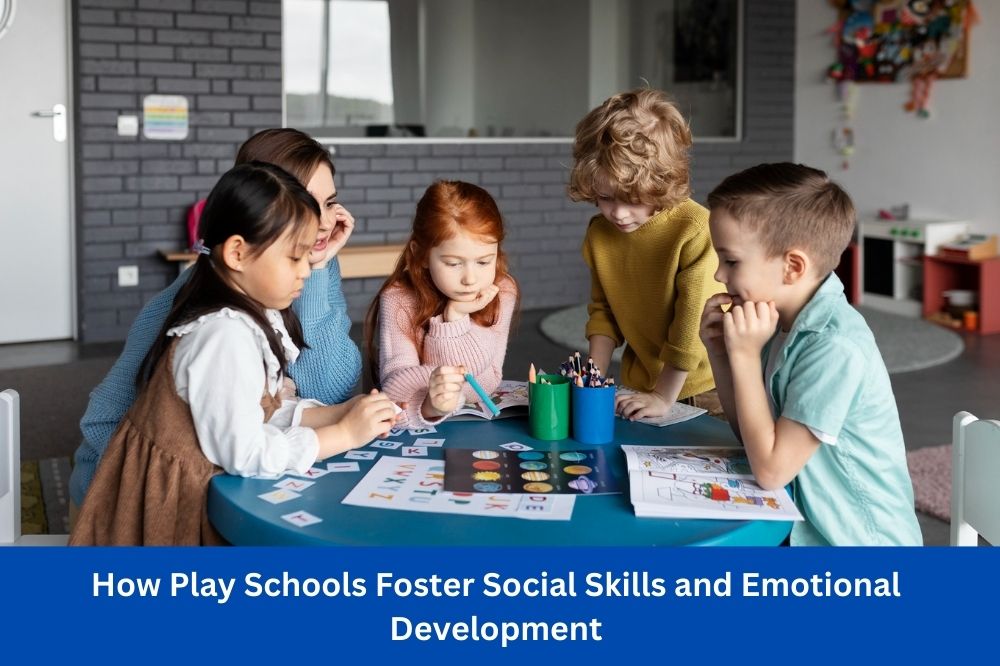
For many children, play school is the first environment where they interact regularly with peers outside their family. These interactions help children learn:
- How to make friends
- How to take turns and share
- How to communicate needs and feelings
- How to handle disagreements
Peer interaction teaches children that others have thoughts and emotions too, laying the groundwork for empathy and respect.
Role of Teachers in Emotional Development
Educators in play schools play a crucial role in guiding emotional growth. They act as role models, caregivers, and facilitators who help children navigate their feelings.
Effective educators:
- Acknowledge children’s emotions without judgment
- Teach appropriate ways to express feelings
- Encourage problem-solving instead of punishment
- Provide comfort and reassurance when needed
This supportive guidance helps children feel understood and valued, which is essential for emotional security.
Building Emotional Vocabulary
Children often feel emotions before they can name or understand them. Play schools help children develop emotional vocabulary by introducing words for feelings such as happiness, sadness, frustration, excitement, or fear.
Activities that support emotional literacy include:
- Storytelling with emotional themes
- Group discussions during circle time
- Emotion charts and visual aids
- Encouraging children to talk about their feelings
When children can name their emotions, they are better equipped to manage them.
Encouraging Independence and Confidence
Play schools provide a safe environment where children are encouraged to try things on their own. Simple daily tasks help build independence and self-confidence.
These tasks may include:
- Putting away toys
- Eating independently
- Choosing activities
- Following simple routines
Each small success reinforces a child’s belief in their own abilities, strengthening emotional resilience.
Structured Routines That Create Security
Predictable routines help children feel safe and confident. Knowing what to expect reduces anxiety and allows children to focus on learning and interaction.
Well-structured play school routines often include:
- Arrival and greeting rituals
- Play and learning sessions
- Snack and rest times
- Outdoor play
- Closing activities
This balance of structure and flexibility supports emotional stability.
Conflict Resolution and Problem-Solving
Conflicts are inevitable when children play together. Instead of avoiding conflicts, play schools use them as teaching moments.
Children learn to:
- Use words instead of actions
- Listen to others’ perspectives
- Find fair solutions
- Understand consequences
These experiences teach children how to manage emotions during challenging situations and build long-term social competence.
Developing Empathy and Compassion
Empathy develops when children are encouraged to consider how others feel. Play schools nurture empathy through:
- Group activities
- Cooperative games
- Story-based discussions
- Helping and caring routines
As children learn to recognize and respond to others’ emotions, they become more compassionate and socially aware.
Importance of Group Activities
Group activities help children understand teamwork and collective responsibility. Through music, art, games, and storytelling, children learn to:
- Participate actively
- Respect group rules
- Appreciate others’ contributions
- Feel a sense of belonging
This sense of inclusion boosts emotional well-being and confidence.
Communication Skills and Social Interaction
Strong communication skills are essential for healthy social relationships. Play schools create opportunities for children to express themselves through:
- Conversations with peers and teachers
- Songs and rhymes
- Storytelling sessions
- Show-and-tell activities
These interactions improve listening skills, vocabulary, and confidence in expression.
Emotional Regulation and Self-Control
Young children are still learning how to manage emotions such as anger, excitement, or disappointment. Play schools guide children toward emotional regulation by:
- Teaching calming techniques
- Encouraging patience and waiting
- Reinforcing positive behavior
- Modeling self-control
These skills help children respond thoughtfully rather than impulsively.
Creating a Safe and Inclusive Environment
A sense of belonging is essential for emotional development. Play schools that promote inclusivity ensure that every child feels accepted and valued.
Inclusive environments encourage:
- Respect for differences
- Acceptance of individual strengths
- Equal participation
- Positive self-identity
Children who feel included develop stronger self-esteem and social confidence.
Role of Outdoor Play in Emotional Well-Being
Outdoor play is not just about physical activity; it also supports emotional health. Running, climbing, and playing freely help children:
- Release stress and energy
- Improve mood and focus
- Develop social interaction skills
- Build confidence through physical achievement
Outdoor environments provide opportunities for collaboration, imagination, and emotional expression.
Supporting Children Through Separation Anxiety
Starting play school can be emotionally challenging for both children and parents. Effective play schools manage this transition with sensitivity.
Supportive strategies include:
- Gradual settling-in periods
- Comforting and reassuring educators
- Consistent routines
- Open communication with parents
These measures help children feel secure and develop trust in their new environment.
Parent-School Partnership in Emotional Development
Strong collaboration between parents and educators enhances a child’s emotional and social growth. Regular communication ensures that:
- Parents understand their child’s progress
- Teachers gain insight into the child’s needs
- Emotional support remains consistent
Parents searching for Play Schools often value institutions that treat families as partners in early development.
Teaching Values and Social Etiquette
Play schools introduce children to basic values that guide social behavior, such as:
- Kindness and respect
- Sharing and cooperation
- Gratitude and responsibility
- Honesty and fairness
These values form the moral foundation that supports positive social relationships throughout life.
Observing and Supporting Individual Needs
Every child develops at their own pace. Skilled educators observe children closely to identify strengths, challenges, and emotional needs.
Early support ensures that:
- Shy children gain confidence
- Emotionally sensitive children receive reassurance
- Social challenges are addressed early
This individualized attention promotes healthy development.
Preparing Children for Formal Schooling
While play schools are not meant to replicate formal classrooms, they prepare children emotionally and socially for the next stage of education.
Children develop:
- Comfort in group settings
- Ability to follow routines
- Confidence in communication
- Emotional readiness for structured learning
These skills ease the transition into primary education.
Long-Term Impact of Early Social and Emotional Learning
The benefits of strong social and emotional development extend far beyond early childhood. Children who experience supportive play school environments often grow into individuals who are:
- Emotionally resilient
- Socially confident
- Adaptable to change
- Positive in relationships
- Motivated learners
These qualities contribute to success in academics, relationships, and future careers.
Why Parents Prioritize Play Schools Focused on Development
Parents increasingly recognize that early education shapes lifelong behavior. When searching for Play Schools, they look for environments that:
- Respect childhood
- Encourage emotional expression
- Support social interaction
- Build confidence and independence
Such environments provide children with a strong emotional and social foundation.
Conclusion:
Play schools play a powerful role in shaping a child’s social skills and emotional development during the most formative years of life. Through play-based learning, supportive guidance, peer interaction, and structured routines, children learn how to understand themselves and connect with others meaningfully.
A nurturing play school environment helps children build confidence, empathy, communication skills, and emotional resilience—qualities that support success throughout their educational journey and beyond. For families seeking Play Schools, choosing an institution that prioritizes social and emotional development ensures that a child’s first learning experience is not only joyful but also deeply transformative.
Early childhood education is not about rushing children toward academics—it is about giving them the emotional strength and social skills to thrive in every stage of life.
FAQs:
Q. 1 Why is social development important at the play school stage?
Ans : Early social interaction builds confidence, empathy, and communication skills.
Q. 2 How do play-based activities help emotional growth?
Ans : They allow children to express feelings naturally in a safe, supportive environment.
Q. 3 What role does group play have in early learning?
Ans : It teaches sharing, cooperation, and conflict resolution from a young age.
Q. 4 How do play schools help children manage emotions?
Ans : Through guided activities, storytelling, and positive reinforcement.
Q. 5 Can shy children benefit from play school environments?
Ans : Yes, gentle social exposure helps them gradually build comfort and self-esteem.
Q. 6 Do play schools prepare children for formal schooling?
Ans : They build emotional readiness and social confidence for smooth transitions.